
Alerius, 17 July 2026
In 1898, Lee L. Grumbine wrote a poem about the dengelschtock, a peening anvil used to sharpen scythes. The poem actually opens up into a wider view of the Pennsylvania Dutch grain harvest and, so, one of the most important rituals during the harvest appears there:
Mid’em Korb kommt die Maad, —
Am End von der G’maad.
I’m Schatte-baumes kuehle Ruh, —
‘S werd nie vergesse
‘S Nein-uhr Shtick zu esse
Bei’m Heu-mache, ‘s g’hert dazu.
‘The hired girl brings the basket,
At the end of the row of cut grass.
There’s cool quiet in the tree’s shade, —
You never forget
To eat the 9 o’clock lunch
It’s part of making hay.’
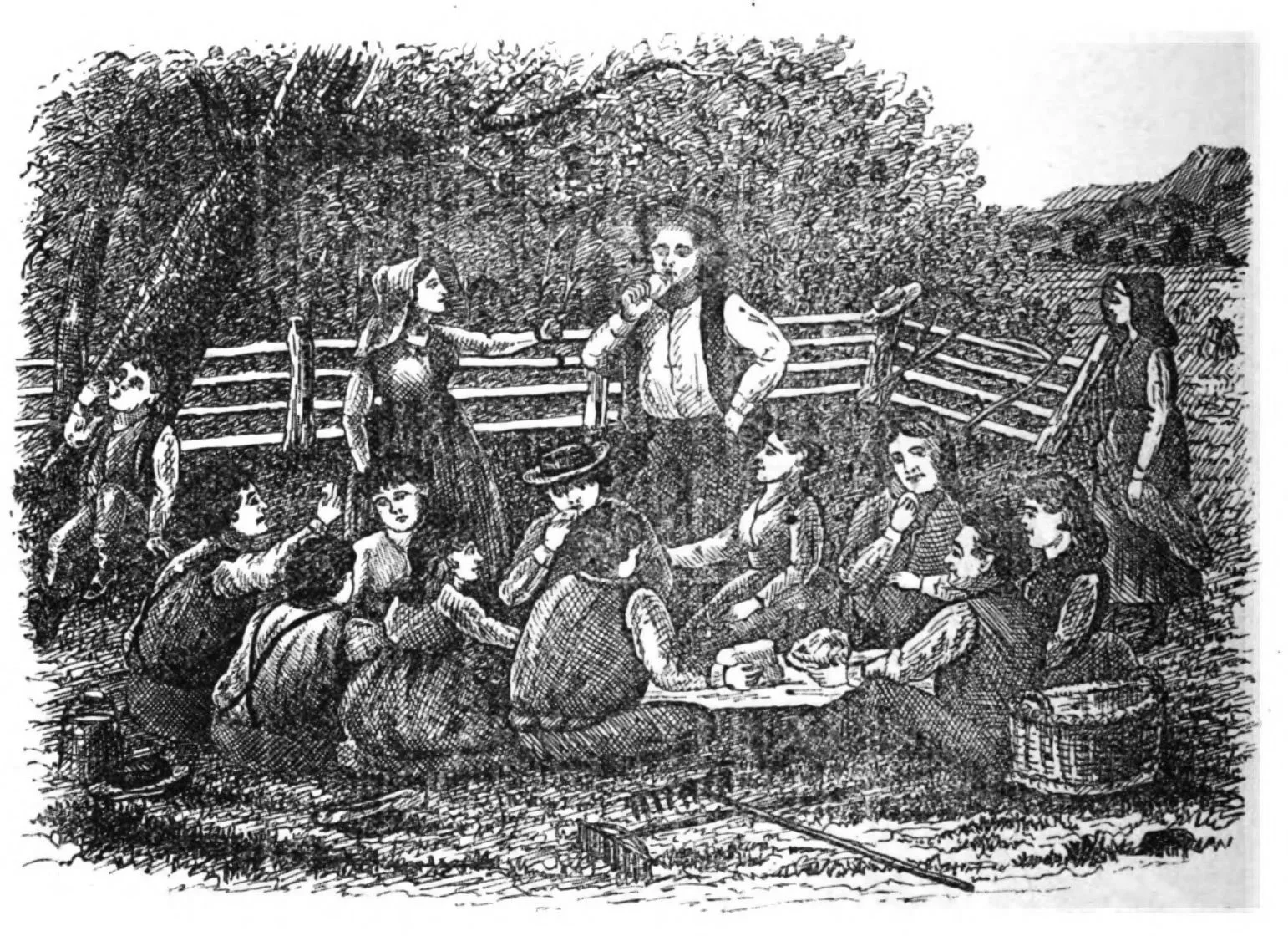
‘S Schtück im Feld ‘the meal in the field’¹
The famed Neinuhr Schtick ‘9 o’clock lunch’ mentioned in Grumbine’s poem was the morning meal break during the busy harvest season among the Pennsylvania Dutch. An early morning and an early breakfast meant that those at work in the field were hungry again by around 9 a.m. and ready for sustenance. Bread and butter, cold meats and cheese, pies, and cakes were brought out to the field. Beloved was the fried dough or fritter, sometimes studded with sour cherries during July harvests. These were called baueregnepp ‘farmers’ dumplings’ and were similar to a fried cruller.²
There was also milk and lemonade to drink and, in some areas, an essich-schling ‘vinegar punch’ made with water, maple syrup, ginger, and, of course, vinegar — which probably tastes something like a shrub, now trendy again because of kombucha. I believe some places in the Pennsylvania Dutch country call this “hay maker’s sweat,” though I can’t remember exactly where I heard it. Depending on the farmer, there might be something stronger to drink, like rye whiskey.³
There was an afternoon lunch, too — around 3 o’clock, after dinner and before supper — but that one wasn’t as cherished as the Neinuhr Schtick. The Neinuhr Schtick was welcome relief after the first hours of tough manual labor, taken al fresco, and without ceremony. It has become a cherished memory among the Pennsylvania Dutch. So cherished that when performing folk songs and dances at the 1939 New York World’s Fair, a troupe led by folklorist Thomas Brendle presented a demonstration of “Nine O’Clock Lunch in the Harvest Fields” for the world to experience Pennsylvania Dutch culture.
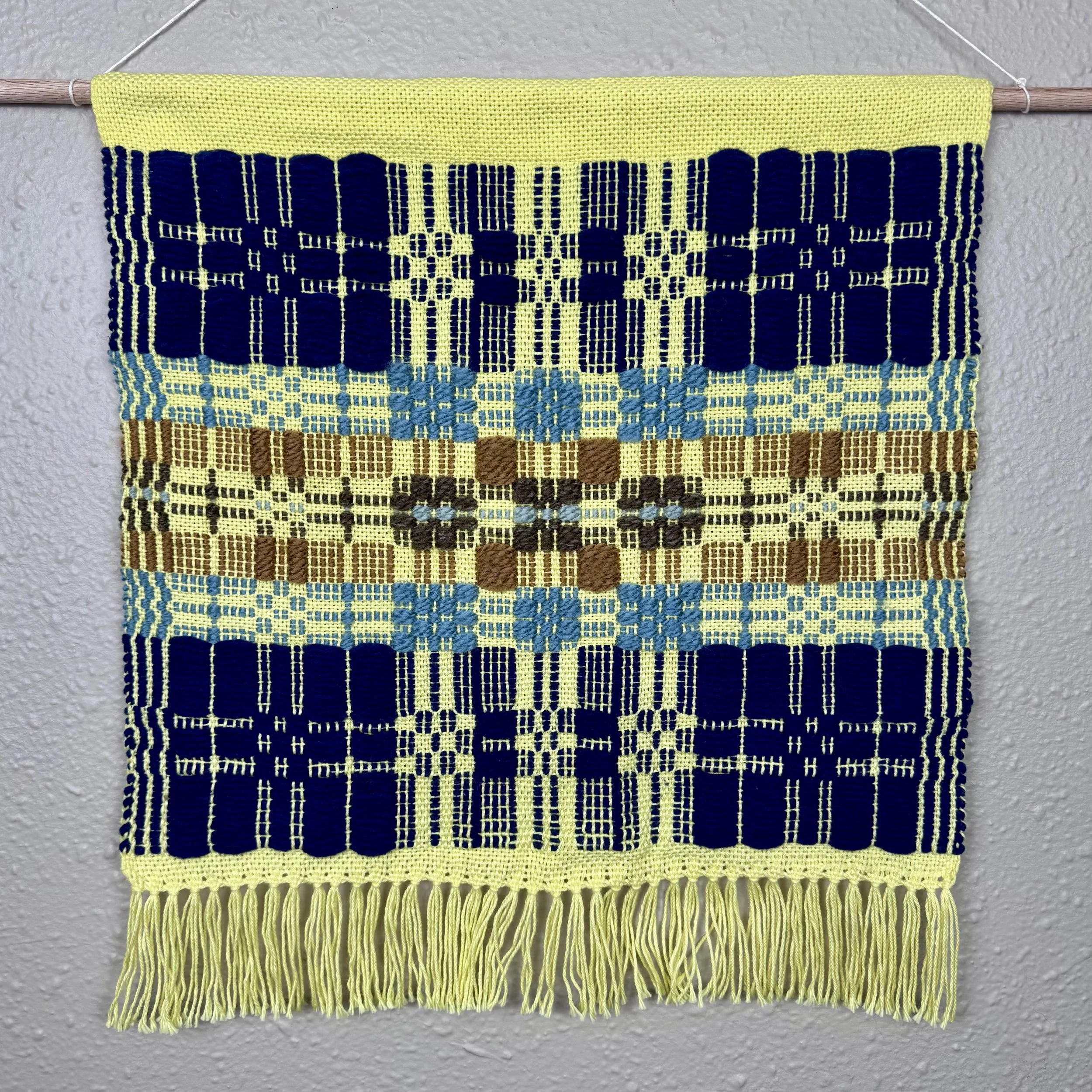
Now, why am I going on about the Neinuhr Schtick? This week I was weaving an old Pennsylvania Dutch pattern on my loom. It’s one from the itinerant late 18th/early 19th century weaver John Landes, whose pattern book is now housed at the Philadelphia Museum of Art.
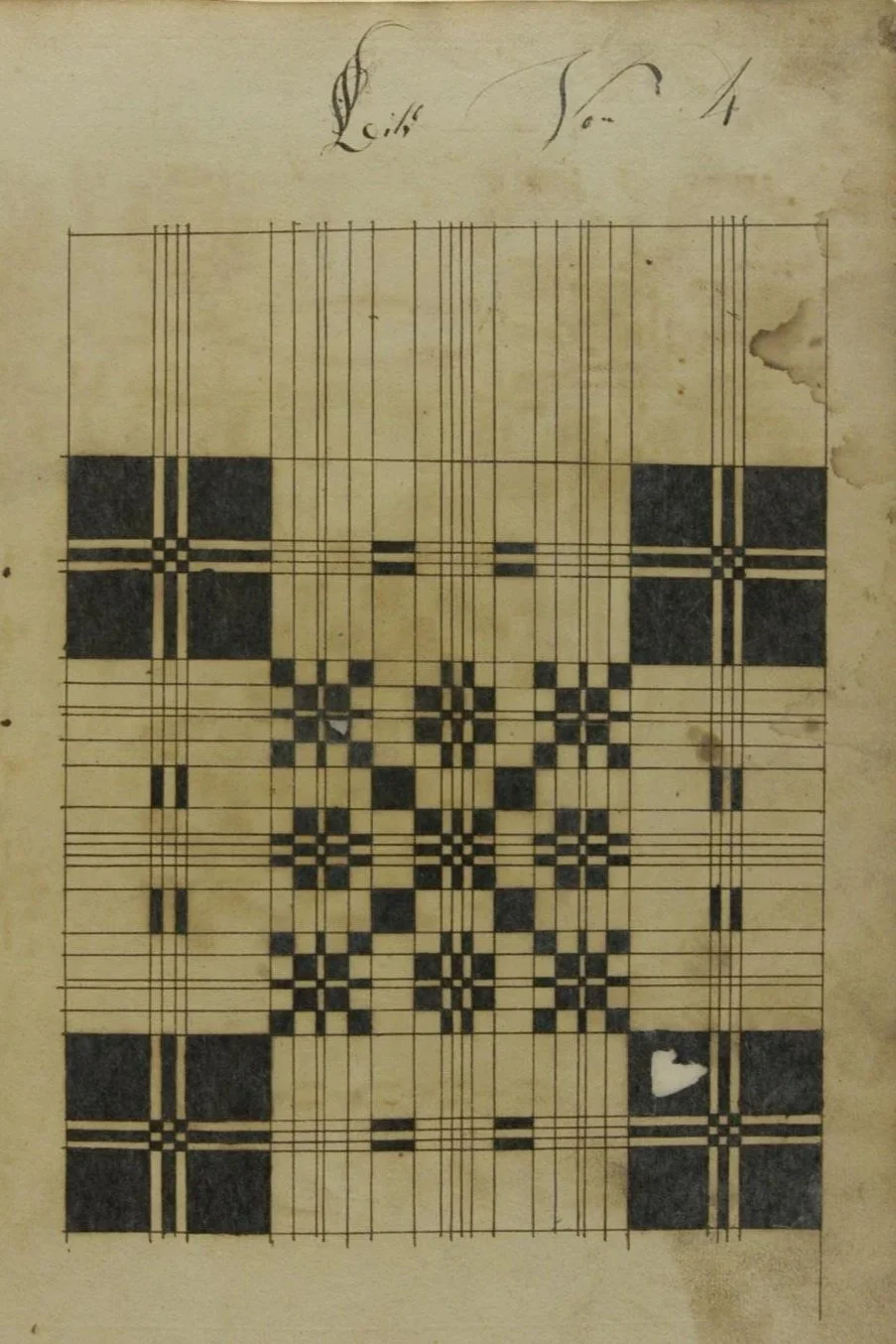
Bild No. 4 from the John Landes weaving pattern book⁴
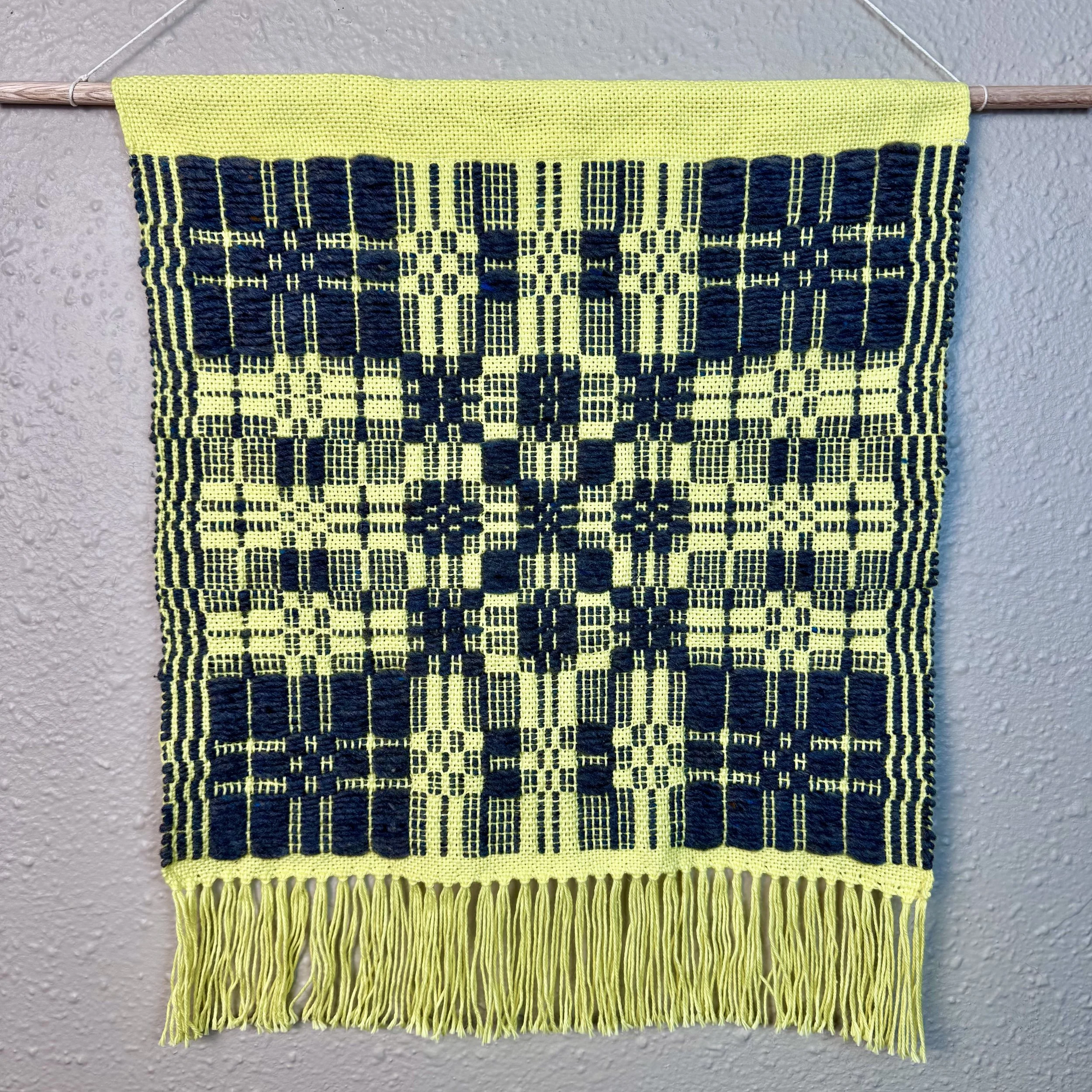
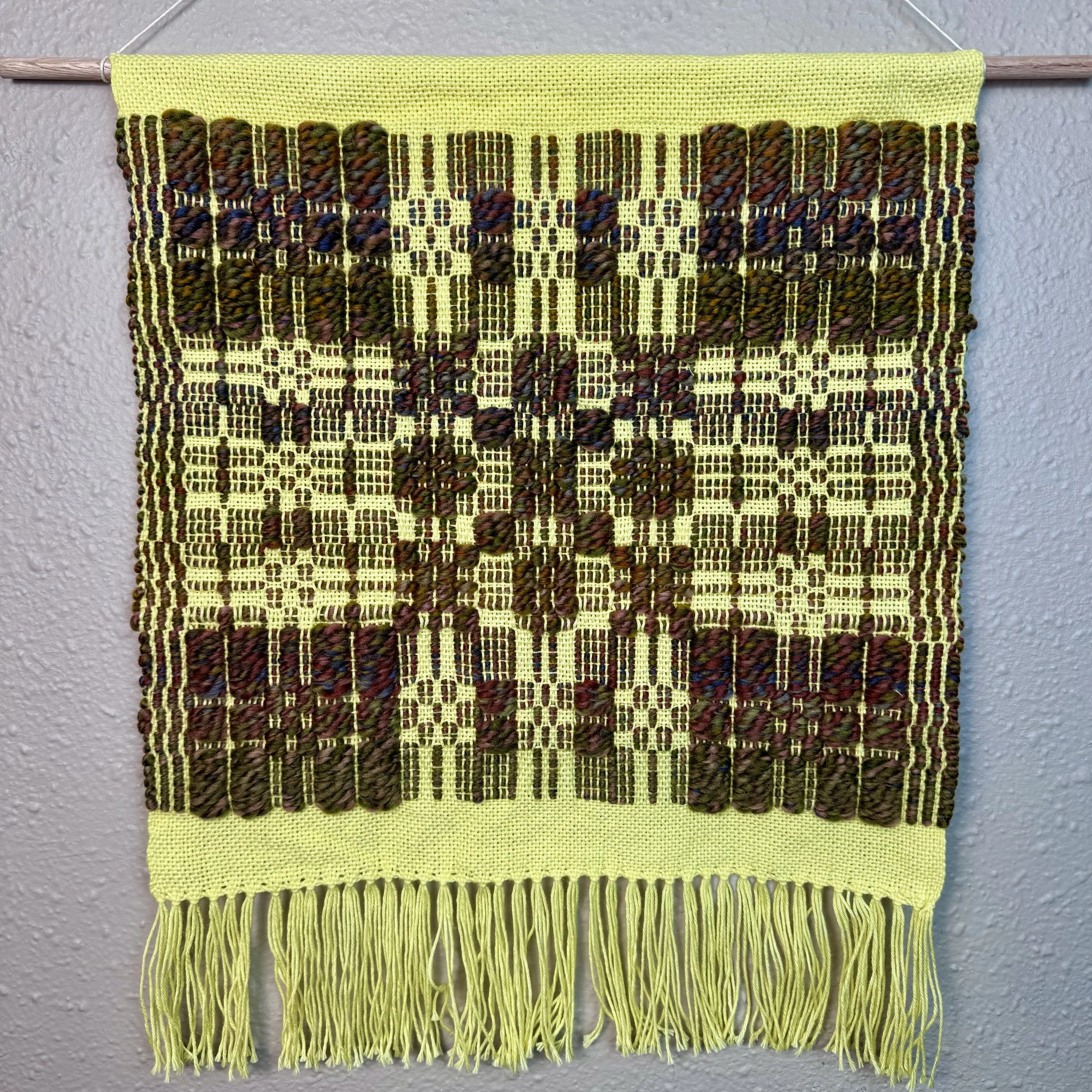
These patterns were used to show households what he could weave for them as coverlets. Landes called this one merely “Number 4.” But as I sat and watched the pattern emerge on the loom, I thought all the squares looked like a patchwork of fields in the Pennsylvania Dutch country, especially now that it’s July and the wheat harvest is upon us. When the nine square patches appeared in the central motif, I knew I had to call it Neinuhr Schtick ‘9 o’clock lunch’. These are wall hangings and I started out with a plain gray yarn for the pattern, but then wanted to play a bit with color and so I chose a multicolored pattern yarn and finally tried to mimic the color design of Fair Isle knitting. They were so fun to weave up and, with a bulky yarn as the pattern weft, they were finished in no time — though, as a notorious late-riser, they certainly weren’t finished in time for a 9 o’clock lunch.
Notes
¹H.L. Fischer, ‘S Alt Marik-Haus mittes in d’r Schtadt un die Alte Zeite. (York, PA: The York Republican, 1879).
²List of menu options: Preston A. Barba, “Deng’lschtuk,” Allentown Morning Call, Jun 27, 1936, p. 7. Baueregnepp: en g’druppte fet kuche tsimlich wie kruller g’macht; es daeg iss yuscht shteiff genuch far drupe mit en Leffel. Sie hen die g’macht far’s nein uhr shtick im feld; mach die net gross, weil sie misse darrichaus gekochd sei. ‘a dropped doughnut made like a cruller; the dough is stiff enough to drop it into oil with a spoon. They were made for the 9 o’clock lunch in the field; don’t make them too large, because they have to get done through’ “Der Grose Henner Sagt,” Lancaster Sunday News, May 15, 1932, p. 6. Also sour cherry fritters served for Neinuhr Schtick: The Hanover Evening Sun, July 4, 1972, p. 2.
³Mention of korn ‘rye whiskey’ being passed around at 9 o’clock lunch (See hut en grosser correb mitt cold-flaish, un budder-brode, rode-reeva, pie, kucha, un so weiter. Oll sin om essa, un sin lushtick. No grickt der bauer de buddle mitt seleem goota oldta korn drum, un lungt see rum; un wos selli kerls en shlucker on sich kot hen! ‘She had a large basket with cold meats, and buttered bread, red beets, pie, cakes, and so on. Everyone was eating and was happy. Then the farmer grabbed the bottle of his good old rye whiskey and passed it around. And how those guys did drink!’) “Der Oldt Bauer Hut Eppes Tzu Sawga,” Lebanon Daily News, August 6, 1941, p. 6.
⁴John Landes, Weaving Pattern Manuscript, c. 1800, Colored ink on laid paper, Philadelphia Museum of Art, Philadelphia, PA.