
The Pennsylvania Dutch have pride in the work of their hands. They have loyalty to the craft they follow.
— Cornelius Weygandt, The Red Hills
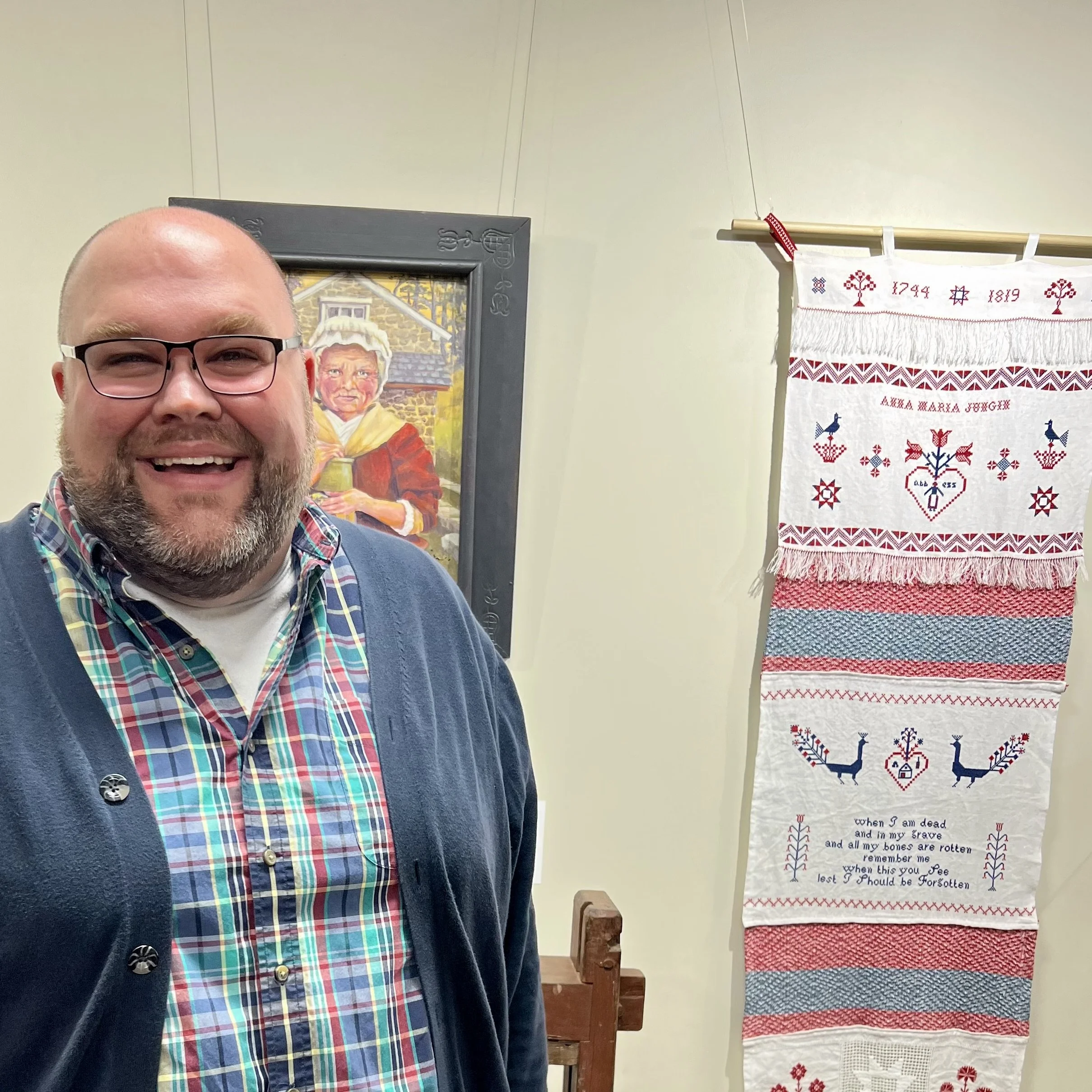
I’m a weaver, educator, and scholar with deep roots in Pennsylvania and the Pennsylvania Dutch community. On my mother’s side, I am an eighth-generation Pennsylvania Dutch descendant; on my father’s side, I trace my ancestry to some of Pennsylvania’s earliest Quaker families. Born and raised in Lehigh County, Pennsylvania, I grew up surrounded by the stories, traditions, language, and folkways that continue to shape my work today. As a professor and recognized expert on the Pennsylvania Dutch, I am passionate about preserving and sharing the rich cultural heritage of this remarkable community.
Much of my connection to Pennsylvania Dutch culture was nurtured at the Bullfrog Inn, a place as colorful as its history. Located at the base of South Mountain in Emmaus, Pennsylvania, the inn was built in the late nineteenth century when iron ore mining flourished in the region. According to local lore, its builder acquired much of the construction material through less-than-honorable means. When the nearby mines closed during Prohibition, the inn took on a new life as a hunting cabin, complete with a secret drinking spot hidden in the basement. Generations of my family called the Bullfrog Inn home. Its history, legends, and lingering ghosts only add to its charm. More importantly, it was there that I listened to the stories of the Pennsylvania Dutch and developed an appreciation for the culture that continues to inspire my folk craft today.
The Pennsylvania Dutch — also known to some as Pennsylvania Germans — are descendants of approximately 81,000 immigrations from Central Europe who settled in what was known as “Greater Pennsylvania” during the eighteenth century. Over time, they developed a distinctive language and culture that remains a vibrant part of southeaster and south-central Pennsylvania. My weaving is inspired by these historical traditions. The Pennsylvania Dutch handspun and handwoven period lasted into the early nineteenth century. Families spun yarn at home and brought it to community weavers who produced durable fabrics for household use. Through my work, I honor these traditions, connecting the skills of past generations with contemporary appreciation for handmade textiles and Pennsylvania Dutch folk culture.