
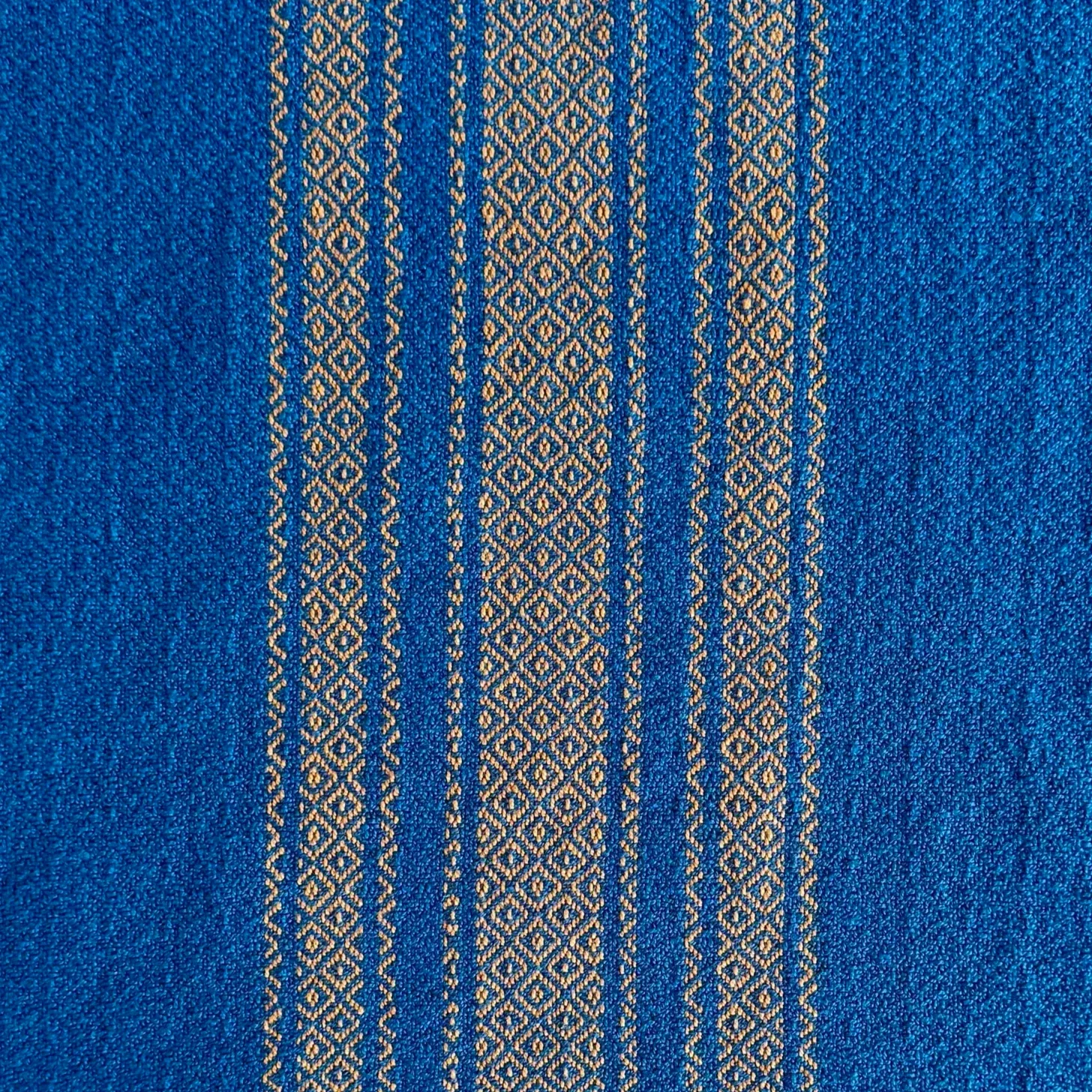
Aunt Betsy
This pattern is based on a diamond patterned tablecloth owned by the Keim family in Berks County’s Oley Valley. They were a peculiar family which stuck to traditional Pennsylvania Dutch ways. Two centuries later, the household had dwindled down to five unmarried sisters. The last one to die was Elizabeth in 1911. She had never traveled by car or train in her entire life, preferring to stay close to home. Her estate included nearly 100 handwoven table linens, including the one I’ve replicated here and am calling “Aunt Betsy” in her memory.
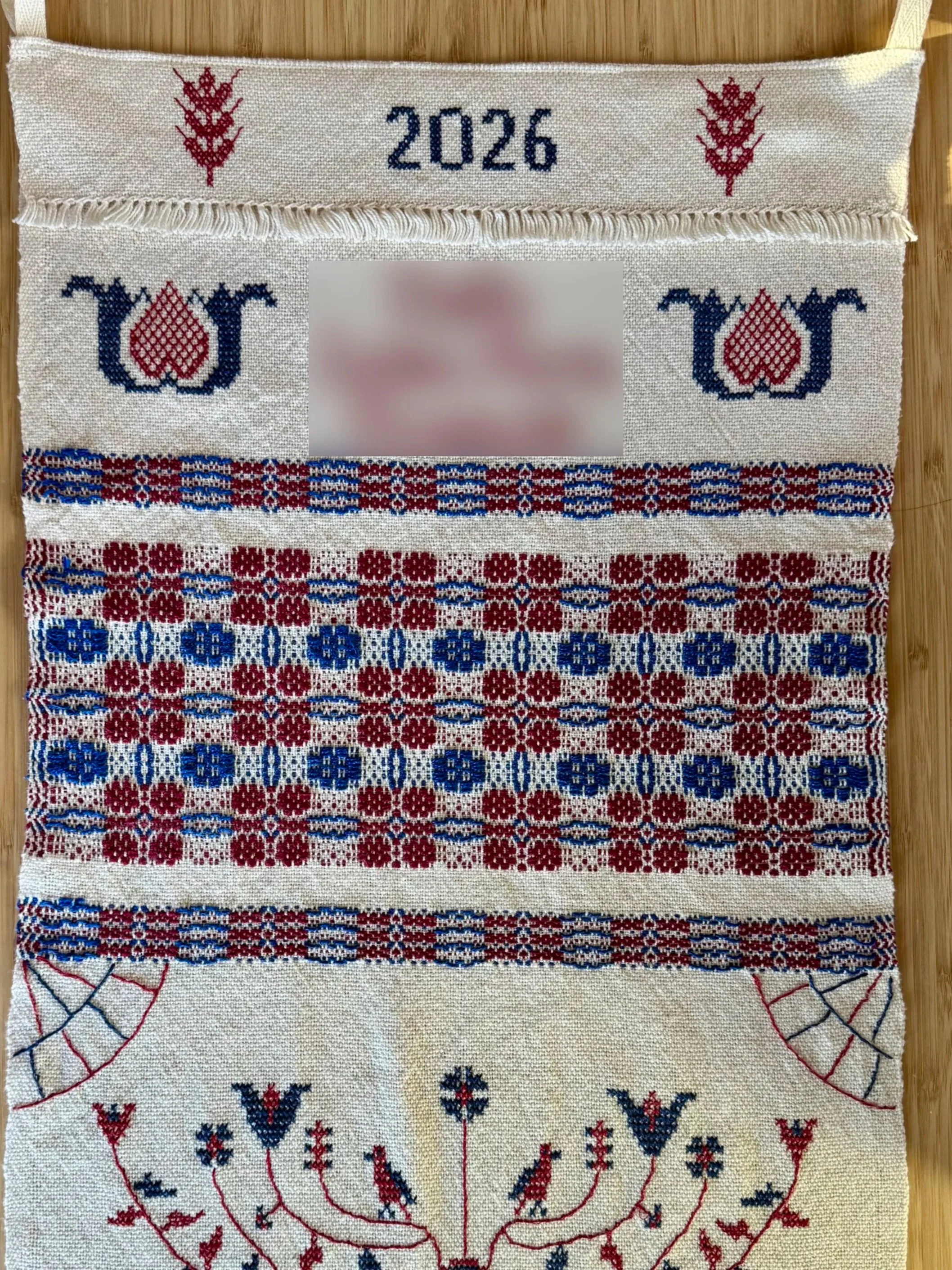
ausgenaeht handduch
The ausgenaeht handduch ‘embroidered towel’ was a common decorative item in 19th century Pennsylvania Dutch home. Originally hanging on the door from the living area (Stubb) to the kitchen (Kich), these narrow pieces of linen were decorated with traditional folk motifs.
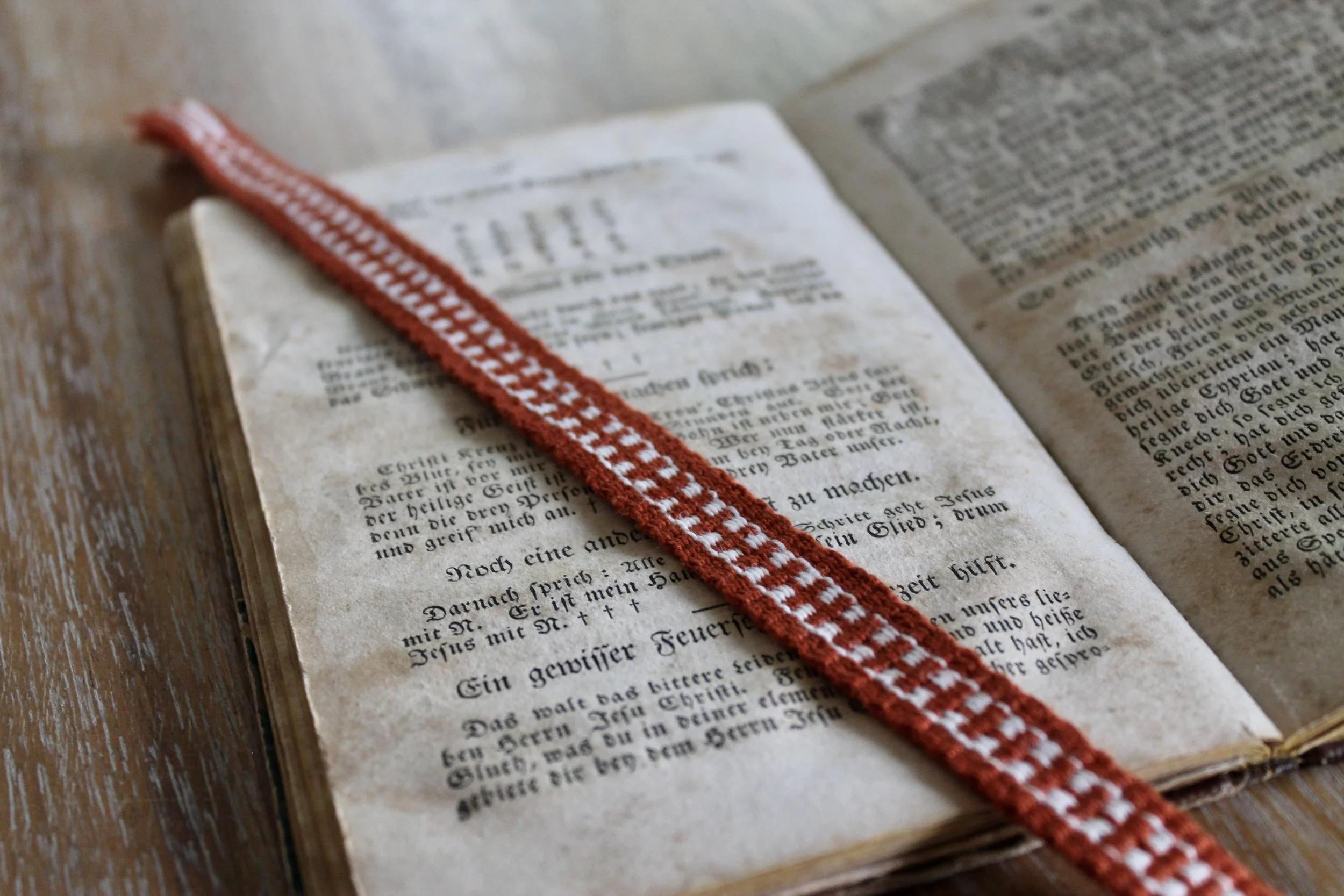
Bendel
Bendel are narrow strips of fabric that were woven on small tape looms found in many Pennsylvania Dutch homes in the 18th and 19th centuries. They supplied the ties for stockings, pockets, and really anywhere you’d need to tie something. I usually weave them as bookmarks.
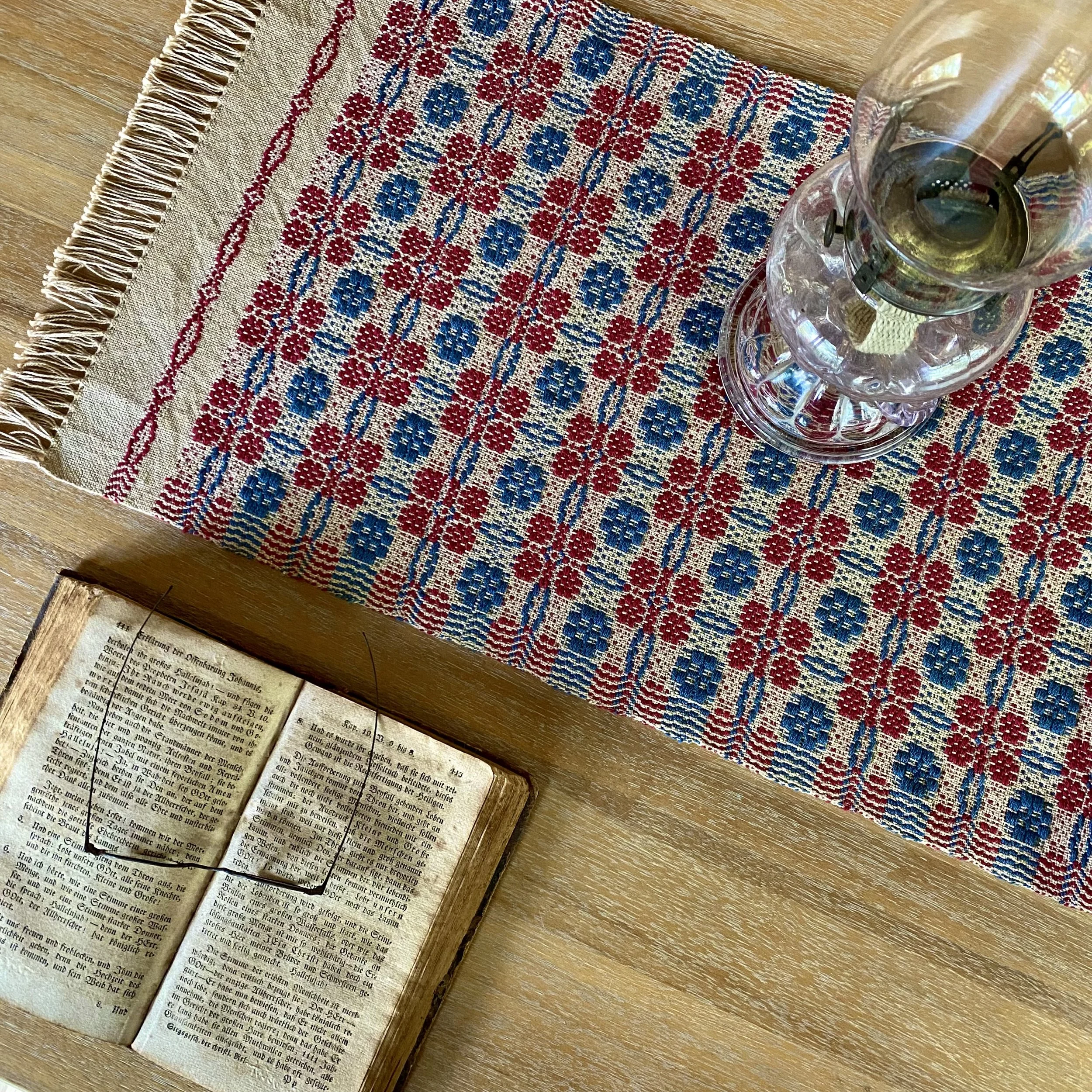
Blummebett
A Blummebett is Pennsylvania Dutch for ‘flower bed’ and calls attention to the many rose designs in this pattern. Each “bed” has a large blue rose surrounded by four smaller red roses. The pattern is found in an old weaving pattern book that belonged to John Landes, an itinerant weaver who traveled southeastern Pennsylvania in the late 18th century. He visited farmsteads with his loom on a large ox cart and showed his pattern book, likely to the lady of the house, who chose a pattern for whatever handwoven piece she needed.
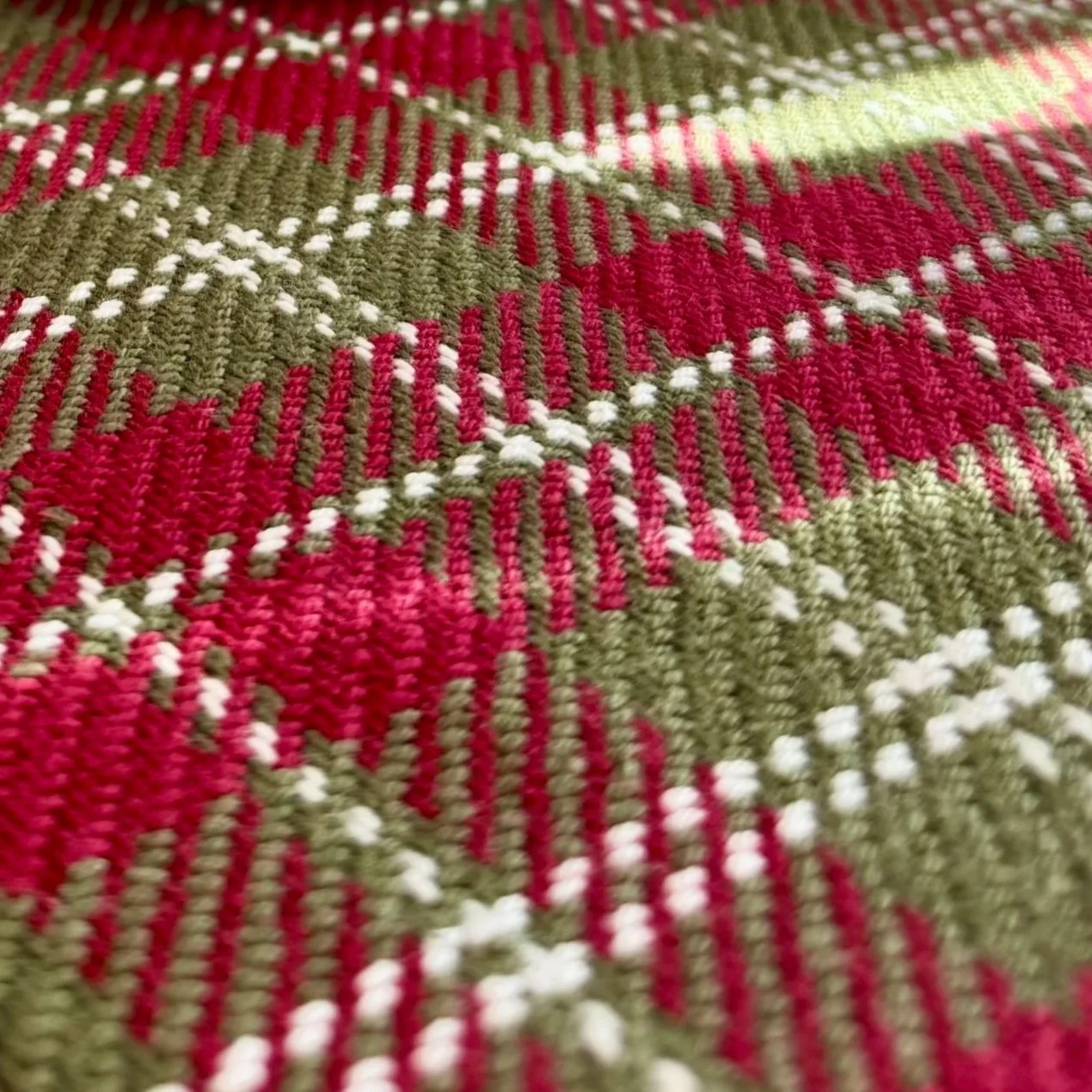
Bucklich Mennli
This pattern was originally found on a 19th century feather bed cover from Hereford Township in Berks County, Pennsylvania. The owner, Regina Shultz, embroidered her initials on it and it is now housed at the Schwenkfelder Library and Museum. The Bucklich Mennli ‘little hunchbacked man’ was a mischievous imp who lived in Pennsylvania Dutch households — the likely cause of your lost keys or a custard that didn’t set.
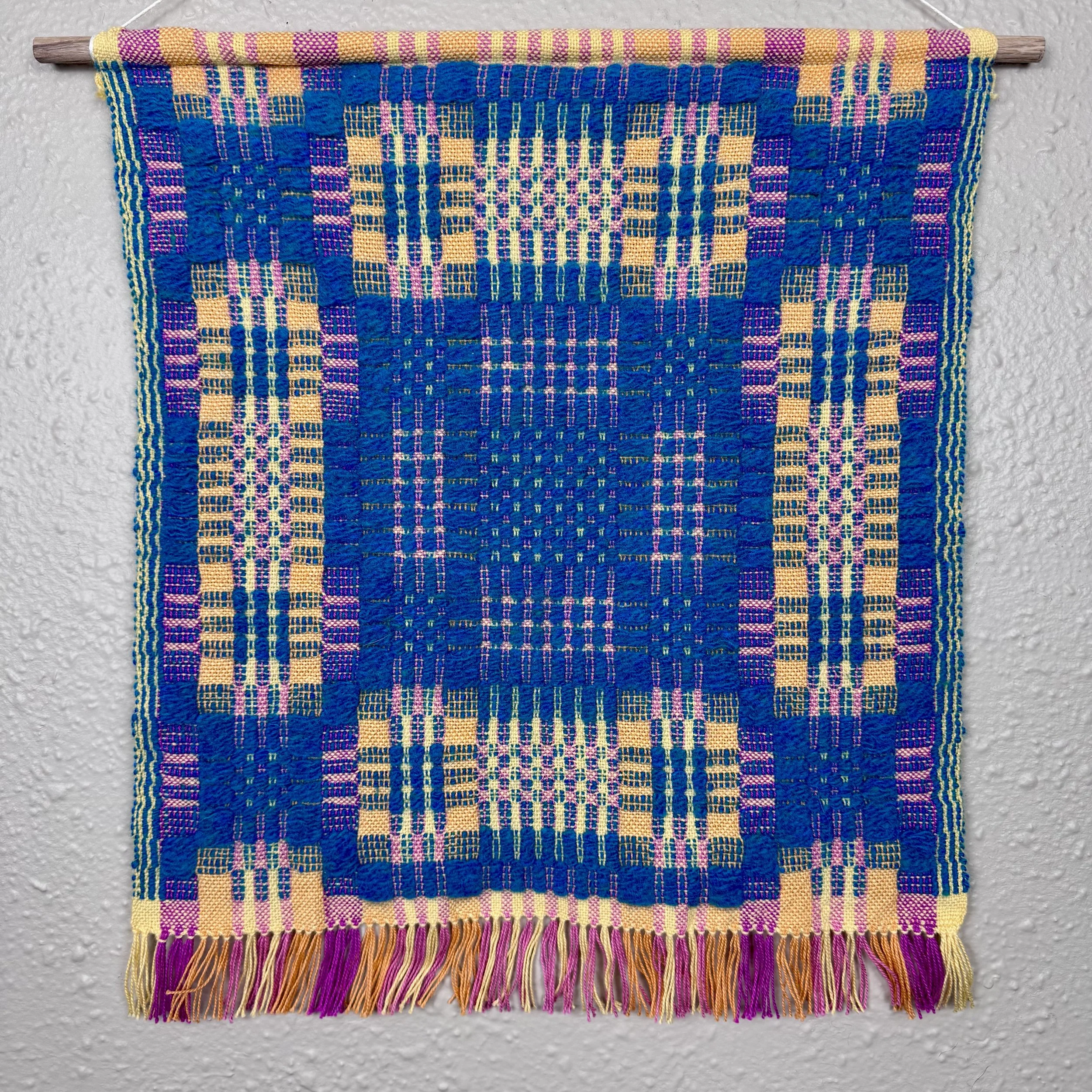
Catalpa flowers
An old overshot pattern that found its way to plenty of ancient coverlets in the 19th century. The catalpa tree is native to North America and is known in Pennsylvania Dutch as the Schodebaam ‘pod tree’, because of the large bean-shaped seed pods that emerge after the blooms.
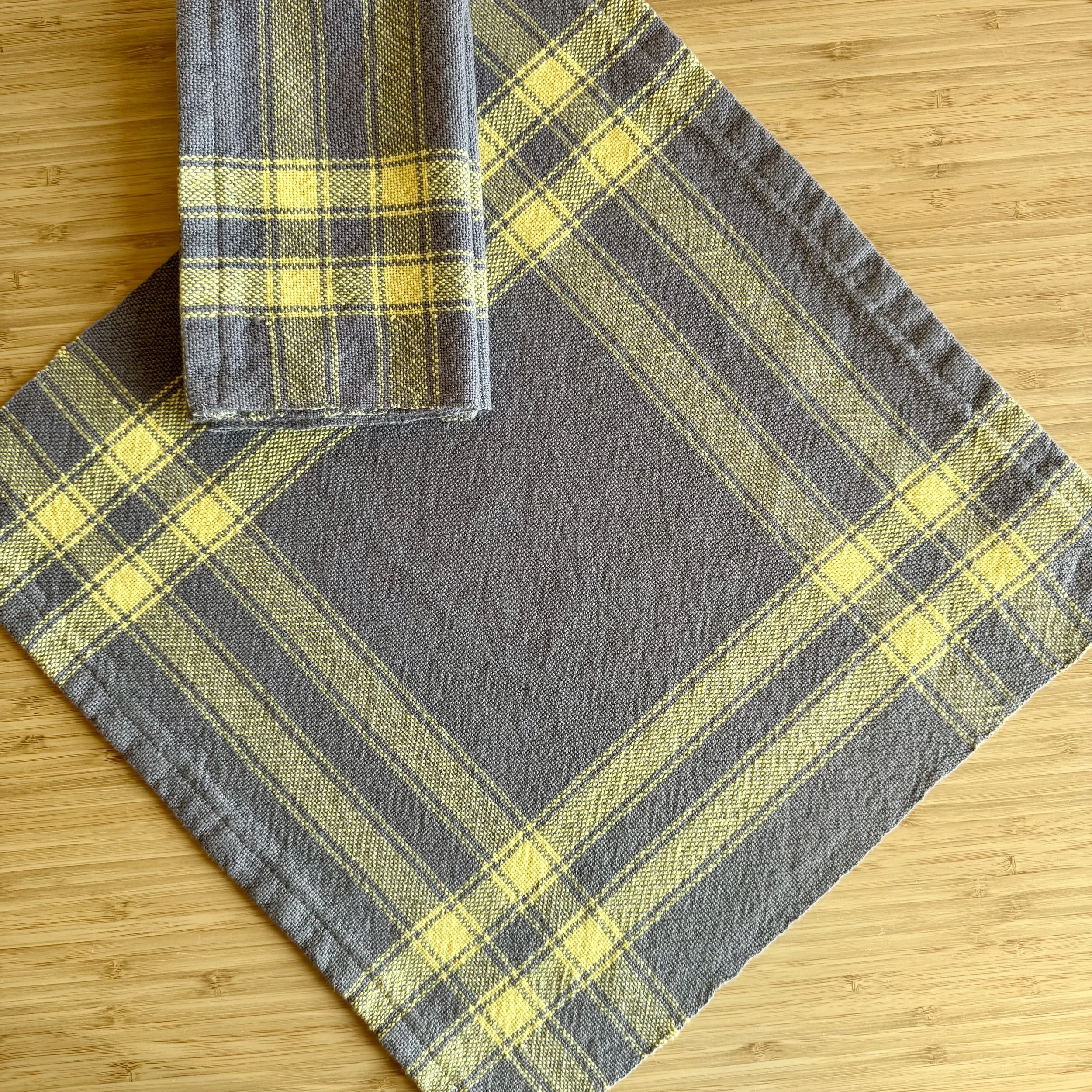
Eckleit
This pattern is based on a bolster cover that is housed at the Goschenhoppen Historians museum in Green Lane, Montgomery County, Pennsylvania. The original is dated 1840–1860 and is in a traditional dobbelstein ‘plaid’ pattern. The Eckleit ‘corner folk’ are fairies that inhabit the corners of fields and gardens. Traditionally, the Pennsylvania Dutch would not plant in field corners so that wildflowers could grow there, keeping the Eckleit happy.
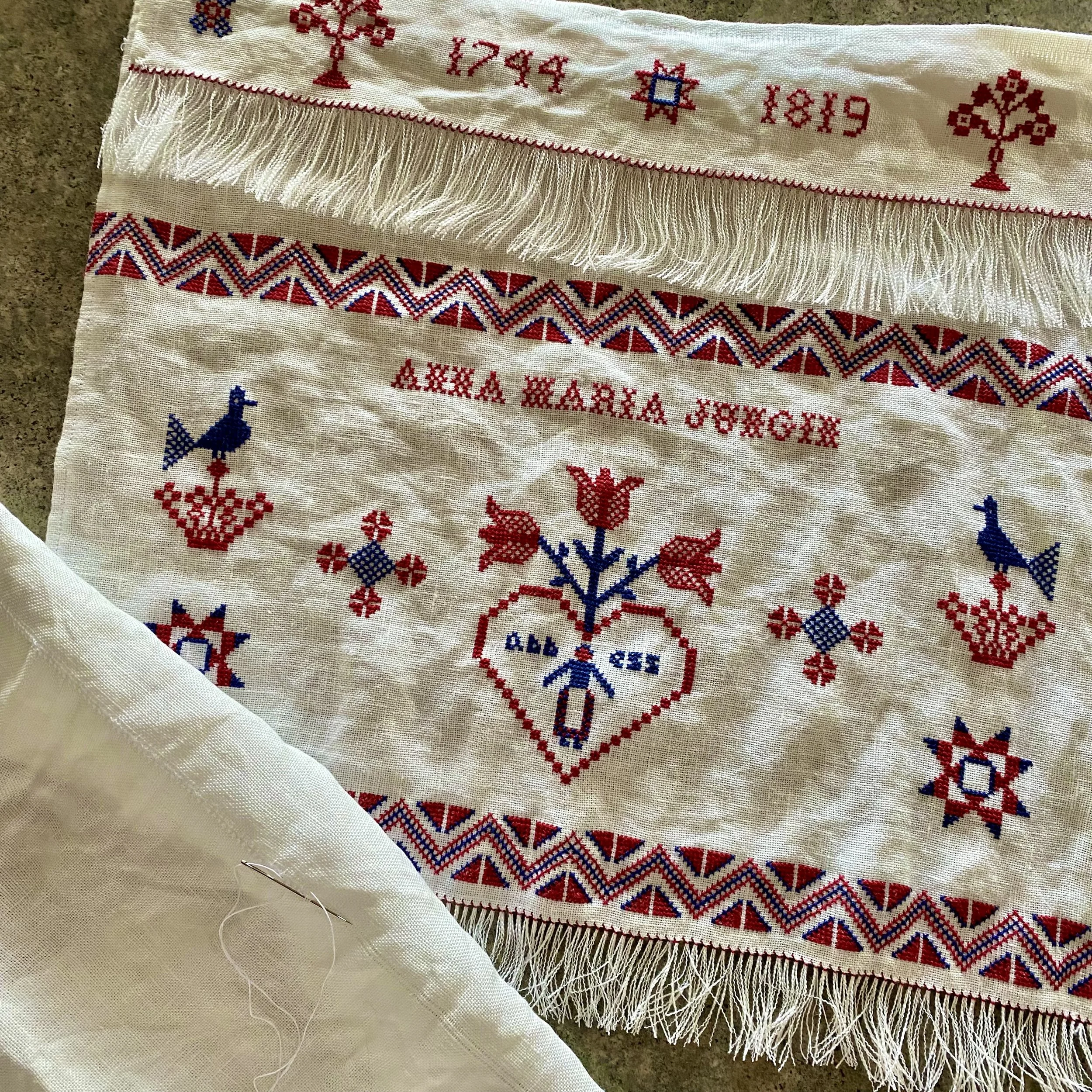
Folk embroidery
Pennsylvania Dutch embroidery is recognizable with its use of madder- and indigo-dyed cotton thread in traditional motifs. Plenty of hearts, birds, and flowers, like tulips and marigolds, are stitched throughout.

Kutztown
This pattern originated in an old manuscript said to have been penned in Kutztown, Berks County. It is the quintessential Pennsylvania Dutch town — home to both the former Kutztown Folk Festival and a public university that started as one of the state’s normal schools. The town is surrounded by rolling fields, tilled by Pennsylvania Dutch and Mennonite farmers.
Meadow Valley
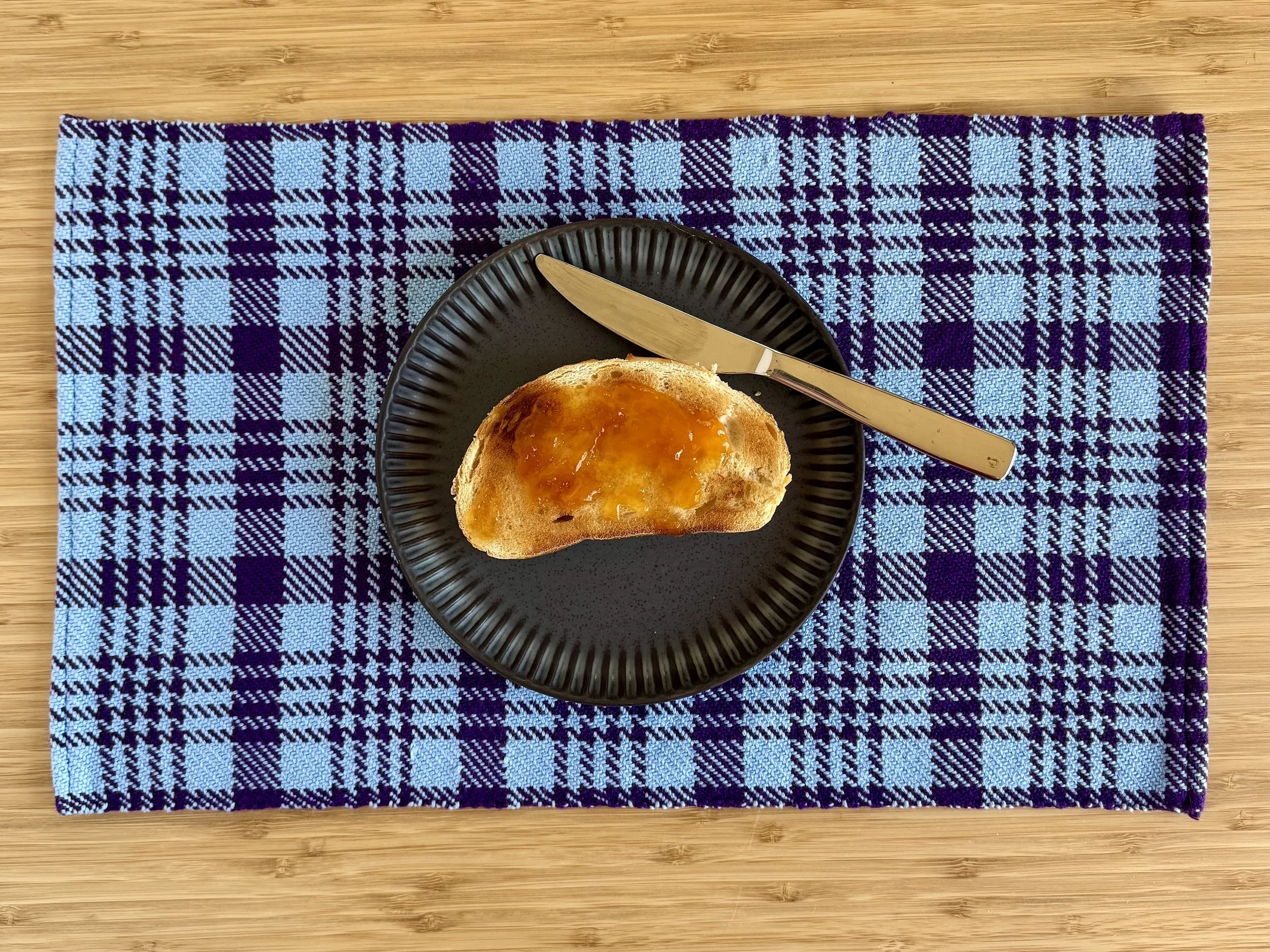
In 1732, Johann Conrad Beissel founded a semi-monastic religious community on the Cocalico Creek in Lancaster County, Pennsylvania. The members were famous for writing and composing music, illuminating their manuscripts, and establishing the second German printing press in the American colonies. This pattern is called dobbelstein zwillich ‘plaid twill’ in Pennsylvania Dutch and is based on a textile by Weaver Kiddinger from the 1850s. He lived just west of the Ephrata Cloister in Meadow Valley and supplied the community with textiles.
Neinuhr Schtick
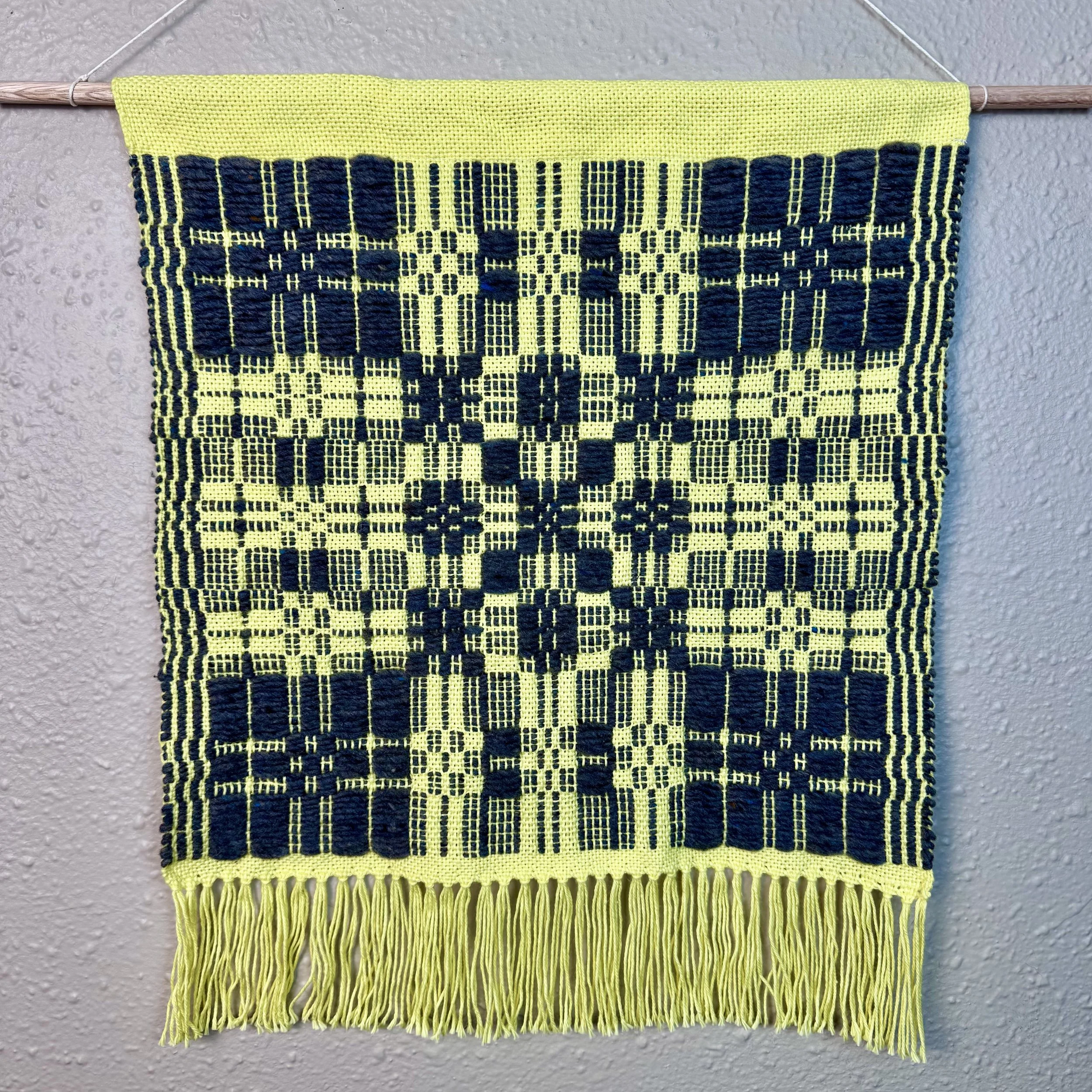
A late eighteenth or early nineteenth century Pennsylvania Dutch pattern woven for coverlets by itinerant weaver John Landes. The pattern name comes from the patchwork fields that dot the countryside. Nine miniature patchwork squares in the center motif remind us of the cherished Neinuhr Schtick ‘9 o’clock lunch’ — a meal provided in the field during harvest time.

St. Gertrude
This pattern is based on a towel housed at the Schwenkfelder Library dated to the 19th century and in a traditional dobbelstein ‘plaid or check’ pattern. St. Gertrude was an important figure in Pennsylvania Dutch folklife. On St. Gertrude’s Day, March 17, the Pennsylvania Dutch plant onions, peas, and potatoes and sprinkle the garden’s corners with crumbs from a special bread called a datsch to bless the soil.
Zinnekopp
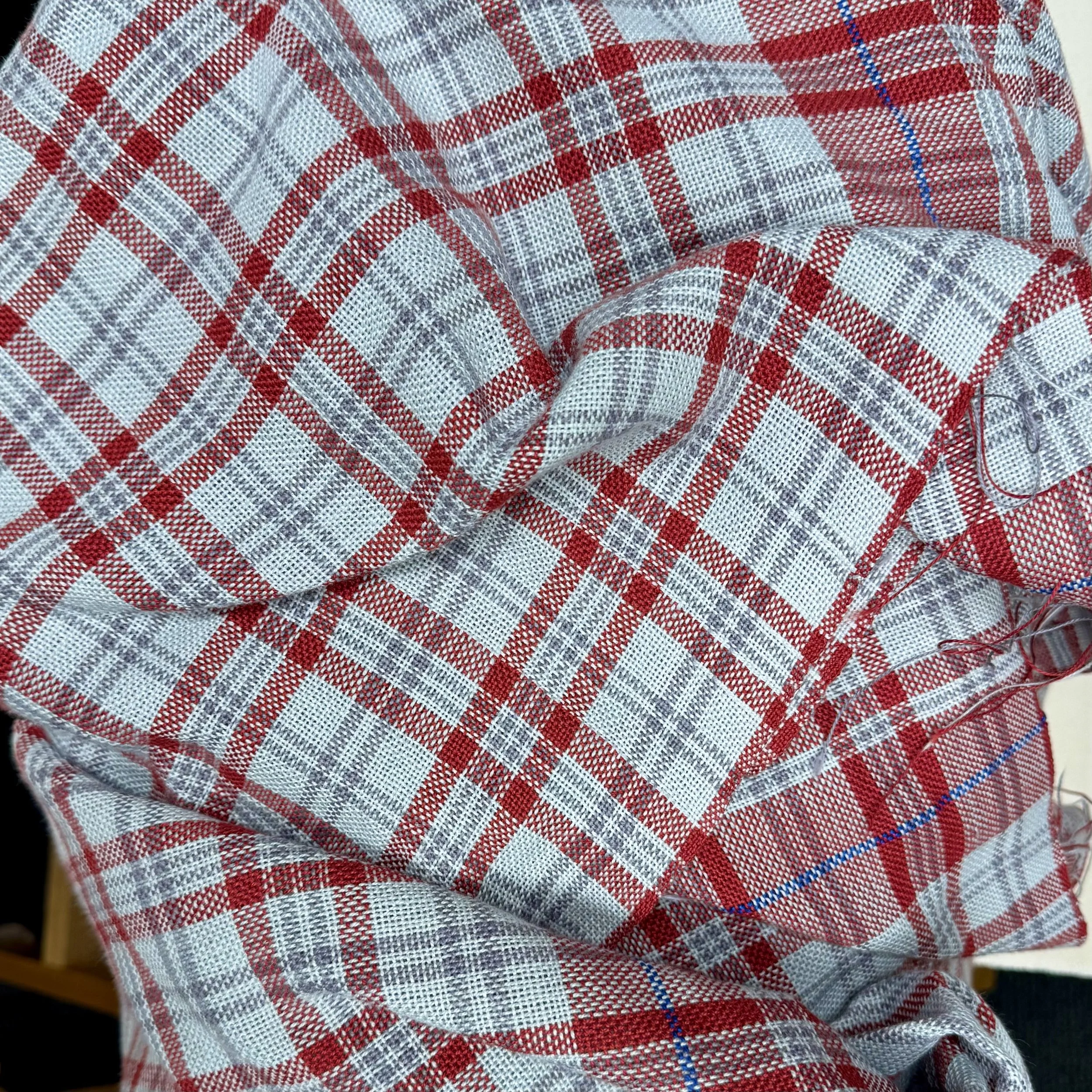
The Zinnekopp ‘Pinnacle’ is the highest peak in Berks County, Pennsylvania. It is located in the Blue Mountain ridge of the Appalachian Mountains. The Zinnekopp looks down at the beautiful Berks County landscape, including the historic New Bethel Union Church founded in 1761. According to local folklore, the Zinnekopp is home to a large dragon who can be seen making nightly flights through the clouds. The pattern is based on a 19th century bed tick now housed at Landis Valley Museum.