Borrowed and new
Castor, 13 Februrary 2026
This past December I was commissioned to make a traditional Pennsylvania Dutch textile to celebrate the birth of a child — an heirloom to hang in the nursery. I decided on an ausgenaeht handduch ‘decorated towel'. These long narrow pieces of white linen were hung on the door in the stubb ‘parlor’ that led to the kitchen. They were decorative and another outlet for working motifs and stitches. Younger women typically embellished them in red and blue cotton thread, choosing motifs that were similar: birds, flowers, and geometric designs.
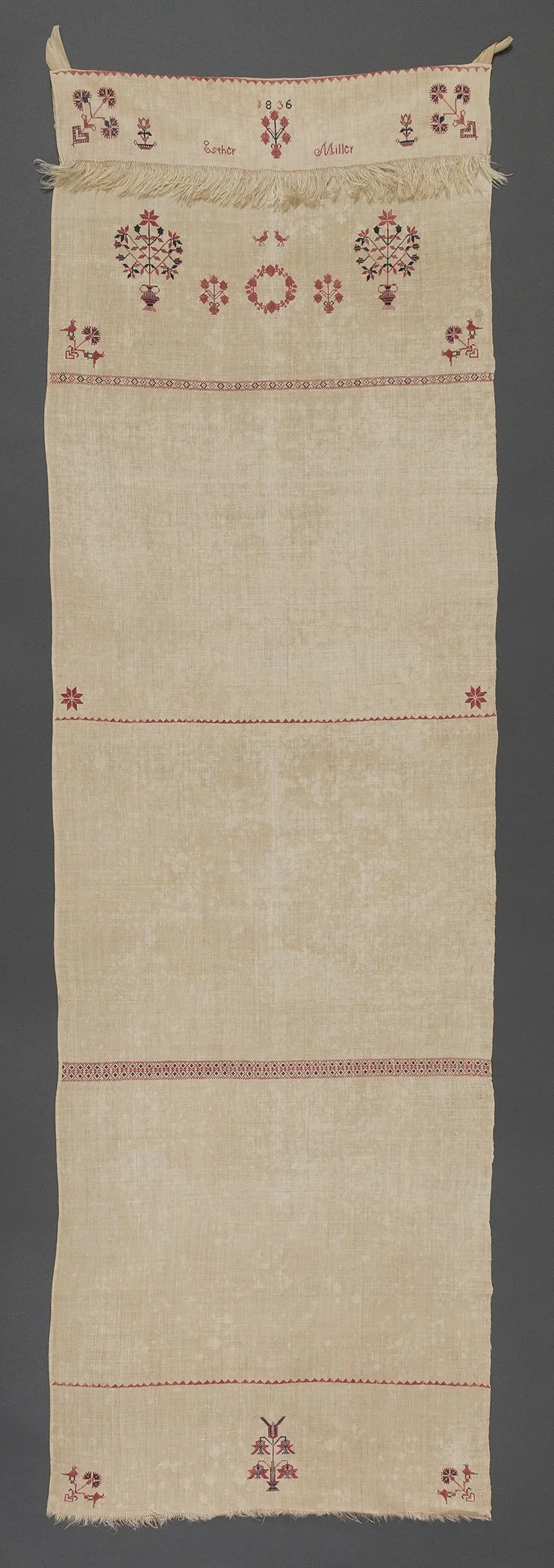
Esther Miller (1836) decorated towel. Winterthur Museum, Garden, & Library (1978.0092)
Although folk artists and craftspeople work within traditions that are recognizable with typical motifs and formats, that does not mean that we are constrained to simply imitate earlier works. Straying slightly from material and design, but still with one foot in the folk tradition means that the folk tradition is still alive, meaningful, and relevant. This isn’t just a copy of a past relic.
I had the opportunity to explore some designs that resonated with the parents. The father shared a photo of a decorated chest that belonged to his great-great-great-great-great grandmother Rosanna and so I interpreted that painted design in my embroidery of a panel on the towel. In the corners are sunbursts, an element borrowed from the carver of his ancestor’s gravestones in Hellertown (Northampton County).
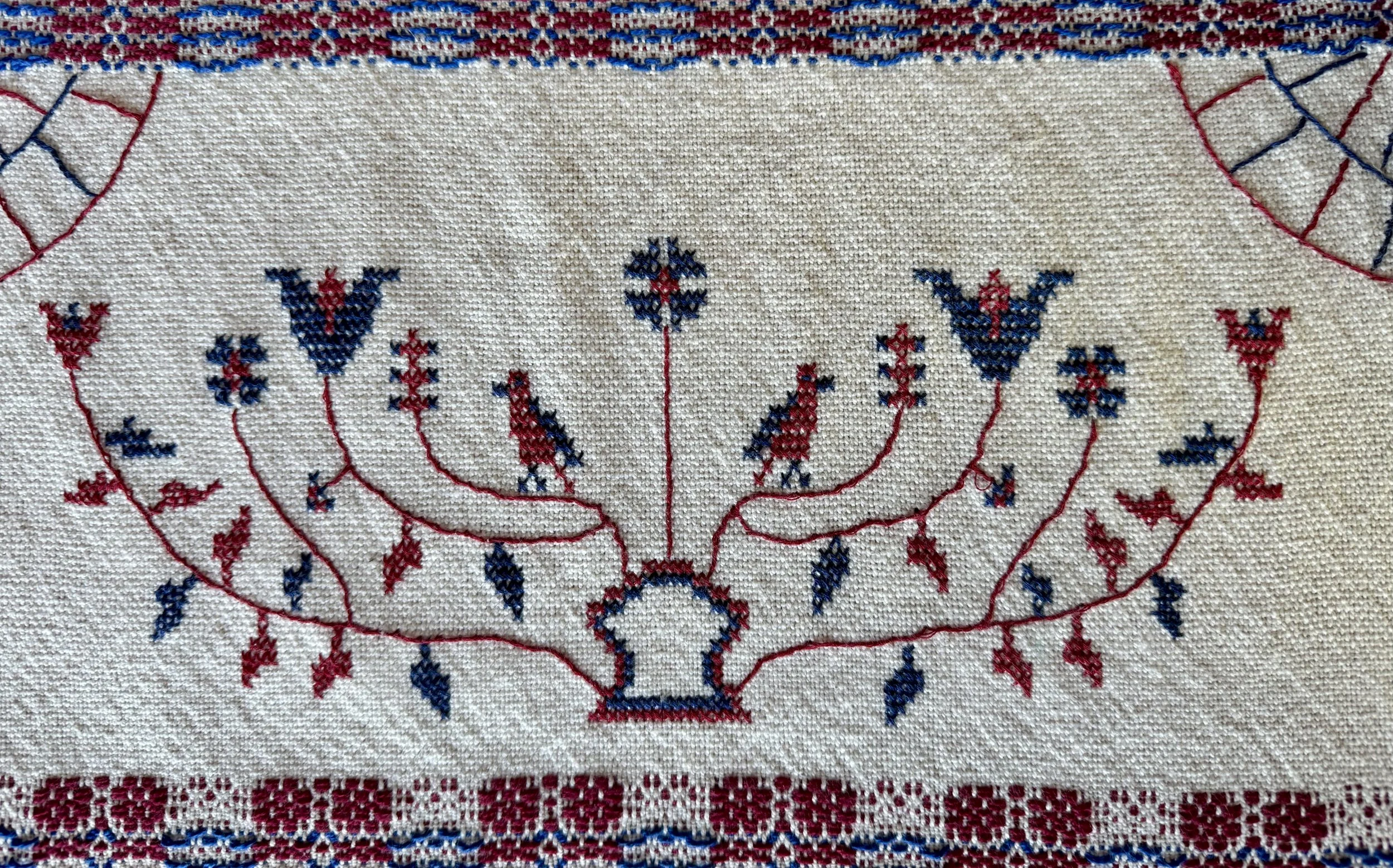
Folk image interpreted from an old chest
Jacob Motz’s gravestones have several characteristic designs and so in addition to the sunbursts, I included his characteristically plump tulips as well. And then there are the heads of wheat — a more symbolic addition to the towel. The mother is descended from early Reformed church folks who eventually followed Philip William Otterbein, the founder of the United Brethren in Christ. Otterbein ministered to a Reformed church in Lancaster, Pennsylvania, but in the late 1760s, he attended a worship service that changed his religious convictions. That service was held near Neffsville in Long’s barn on the threshing floor — hence the wheat.
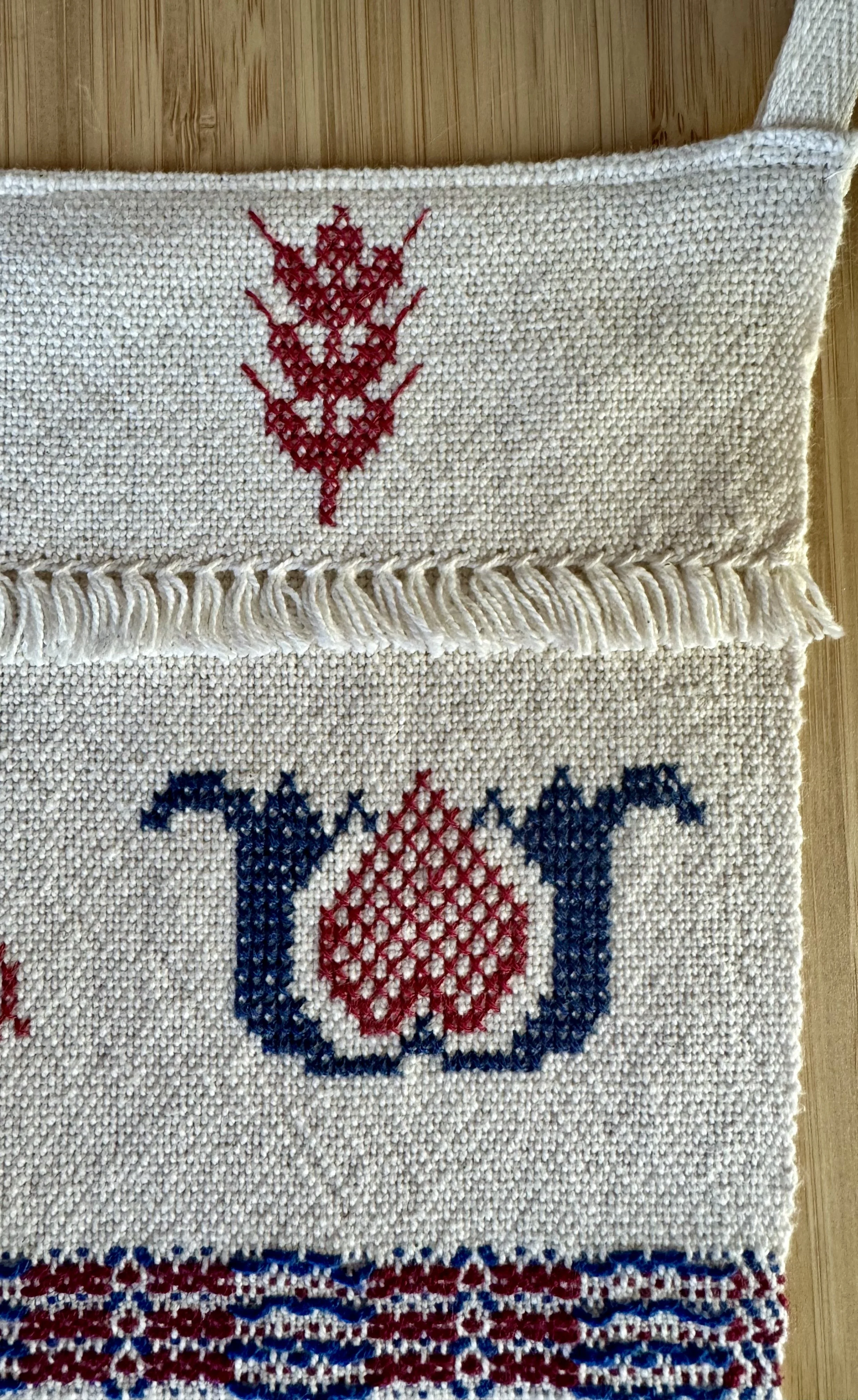
Heads of wheat and plump tulips
Looking at the finished object, it’s a folk textile, yes, but also something truly unique for this child — a reminder through her life of the paths trod by her tribe before her.
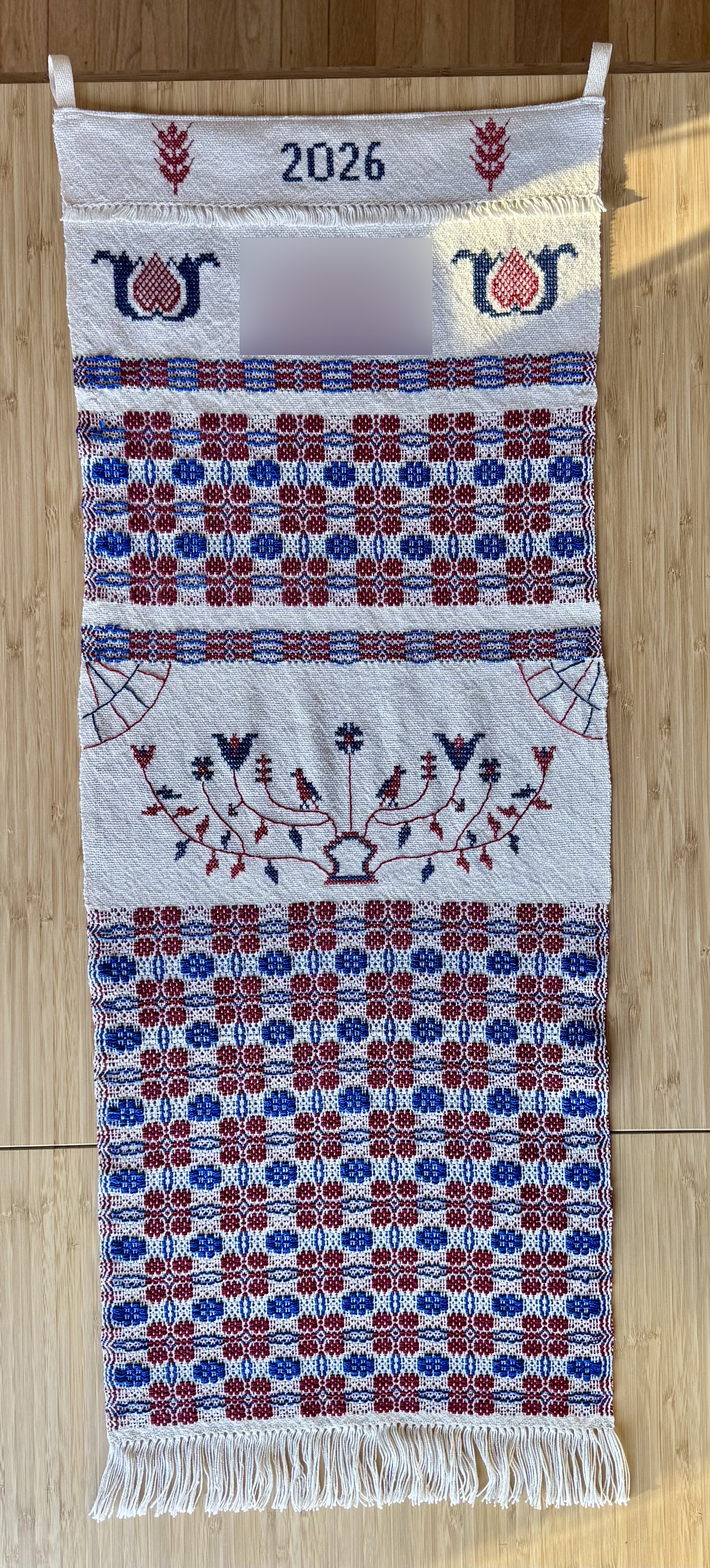
The finished handduch