Pain pulling
Leander, 27 February 2026
Several years ago, I was invited to visit with an elderly Amish husband and wife at their home. The family was among the most conservative Old Order Amish, belonging to a group called the Swartzentrubers. The Swartzentrubers often don’t allow running water in the home, use darker colors for dress, and windowless buggies.
I arrived at 10 in the morning during a heavy downpour. The elderly man had recently had a stroke and got around slowly with a cane. We talked about all sorts of things from state legislation to the weather. The rainy summer made for a terrible hay harvest. His sons were just able to store enough for winter.
As we spoke and the minutes turned to hours, the elderly man’s arm began to tense up. I watched as his wife came into the living room, as if instinctively knowing that he was in pain. She massaged his shoulder and then swiped down his arm. When her hand reached his, she grabbed hold of his thumb in her clenched fist. Then with a swift motion she pulled away, opened her fist, and spread her fingers out to the floor. She continued like this several times over.
I had read once about the old healing practice of “pain pulling” — where you envision the pain as an entity and pull it out of the afflicted’s body, casting it away. The Pennsylvania Dutch performed such practices for both humans and animals.
Today, there are plenty of studies that have been done on the healing power of touch for both physical and mental well being. And I wasn’t surprised at all that the husband seemed relieved during the pain pulling — it was a beautiful, supportive moment. Maybe we’d all benefit from a healthier balance between our digital lives and the physical closeness our virtual realities seek, but often fail, to emulate.
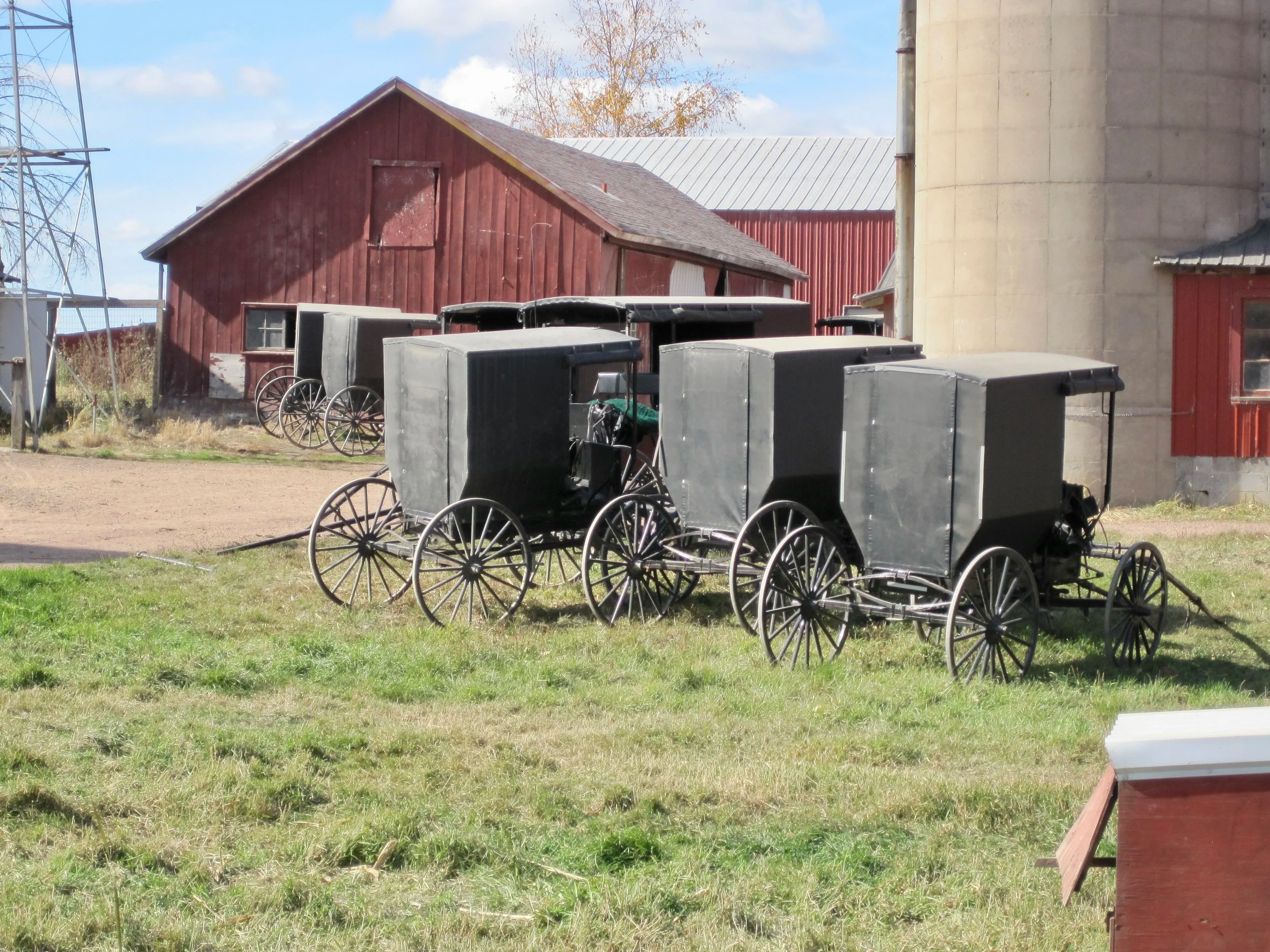
Swartzentruber buggies