Marcellus, 16 January 2026
The Great Depression, 1929–1939, weighed heavily on rural communities in the U.S., and so President Franklin Roosevelt proposed relief, recovery, and reform through a variety of New Deal agencies. One of those agencies — the Farm Security Administration (FSA) — provided relief to rural farmers. The FSA also ran a photography program to document farming operations and, often, the rampant poverty that plagued rural areas. The photography program ran from 1935–1944 and left us with 175,000 images — some which still haunt us today, like Dorothea Lange’s iconic photograph, Migrant Mother.
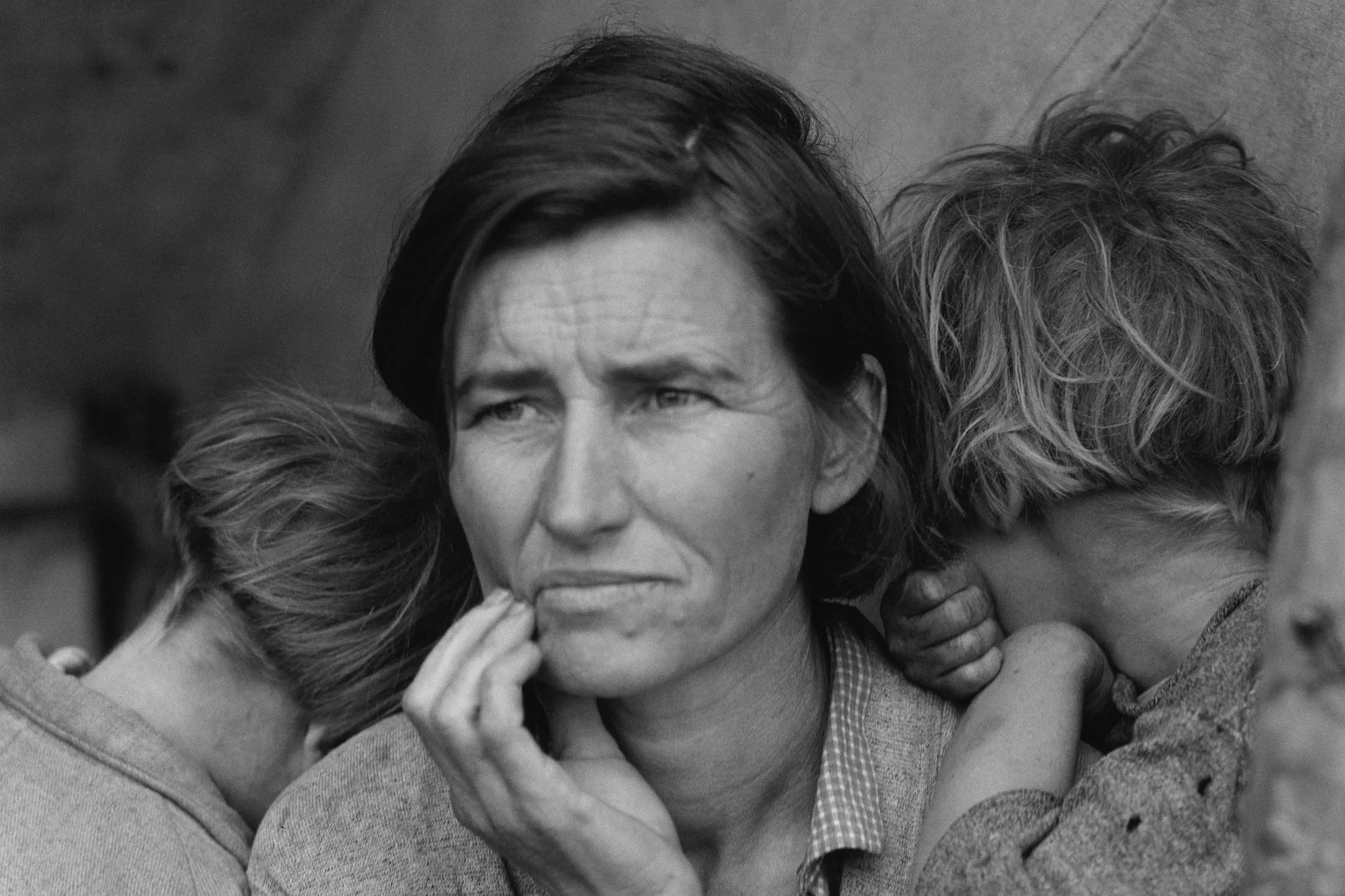
Dorothea Lange, Migrant Mother, 1936
One of Lange’s colleagues in the Farm Security Administration’s photography program was John Collier Jr., who would later make strides in the new field of visual anthropology — documenting cultures through photographs. His most famous works for the FSA centered on Portuguese immigrants in Massachusetts.
On a cold day in 1942, however, Collier found himself on assignment in Lancaster County, Pennsylvania photographing the liquidation of a large farm. He milled around the farm taking photographs of the throngs in attendance as the household and the farm were divided up.
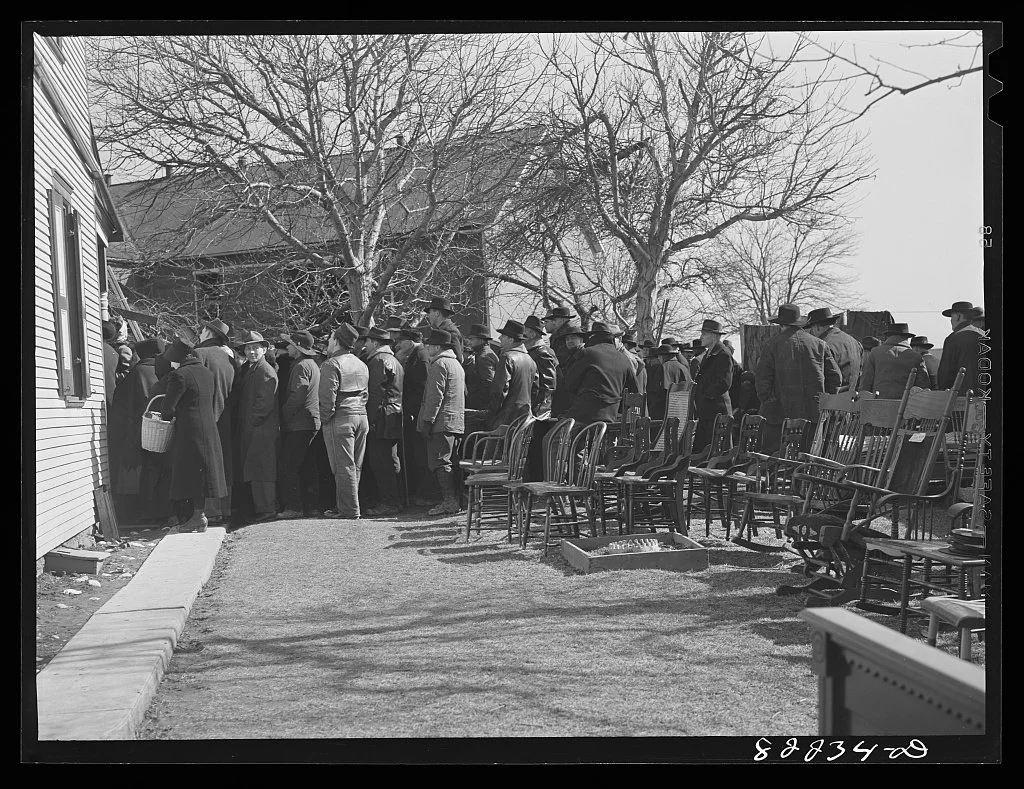
Crowd at the auction [1]
Then, Collier watched as the auctioneer climbed atop a wagon to stand above the crowd. He began working his camera as the auctioneer rattled off the usual pre-sale litany. And then, to Collier’s surprise — but probably not to the surprise of anyone else present — the auctioneer switched from speaking English to Pennsylvania Dutch.
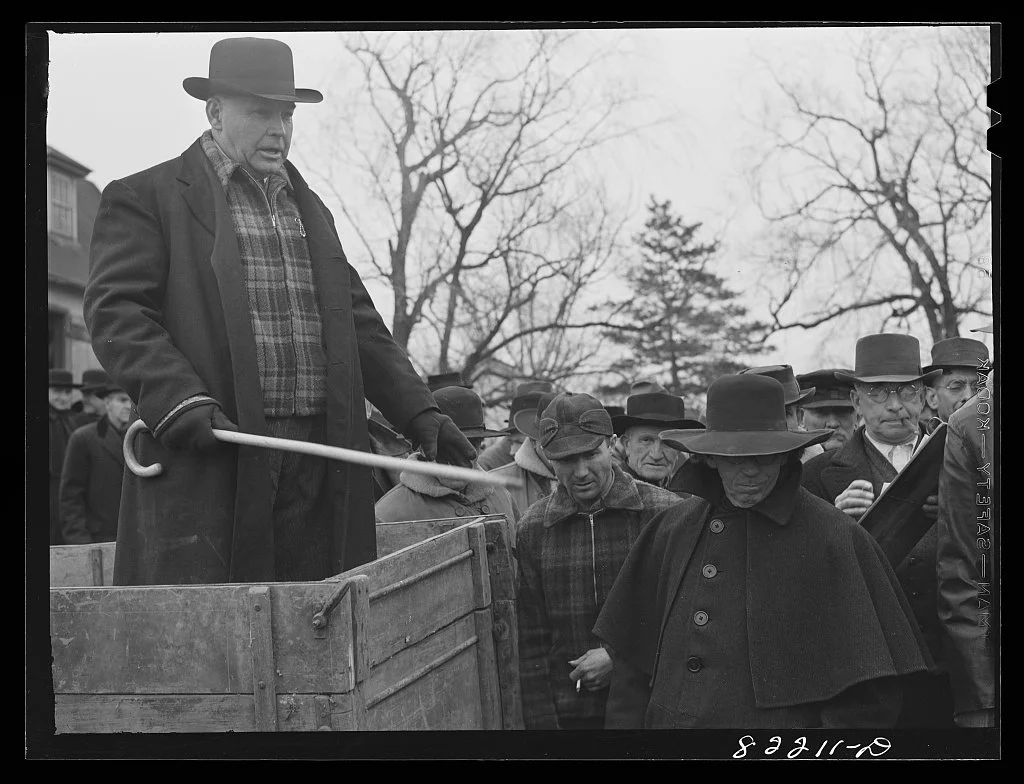
Auctioneer switching between English and “Deutsch” [2]
The auctioneer continued in this way, calling out in English and then switching to Pennsylvania Dutch — Collier wrote it down as “Deutsch” in his notes. From his photographs, we can still “hear” the Pennsylvania Dutch being spoken by the many Amish and Mennonite folks in attendace.
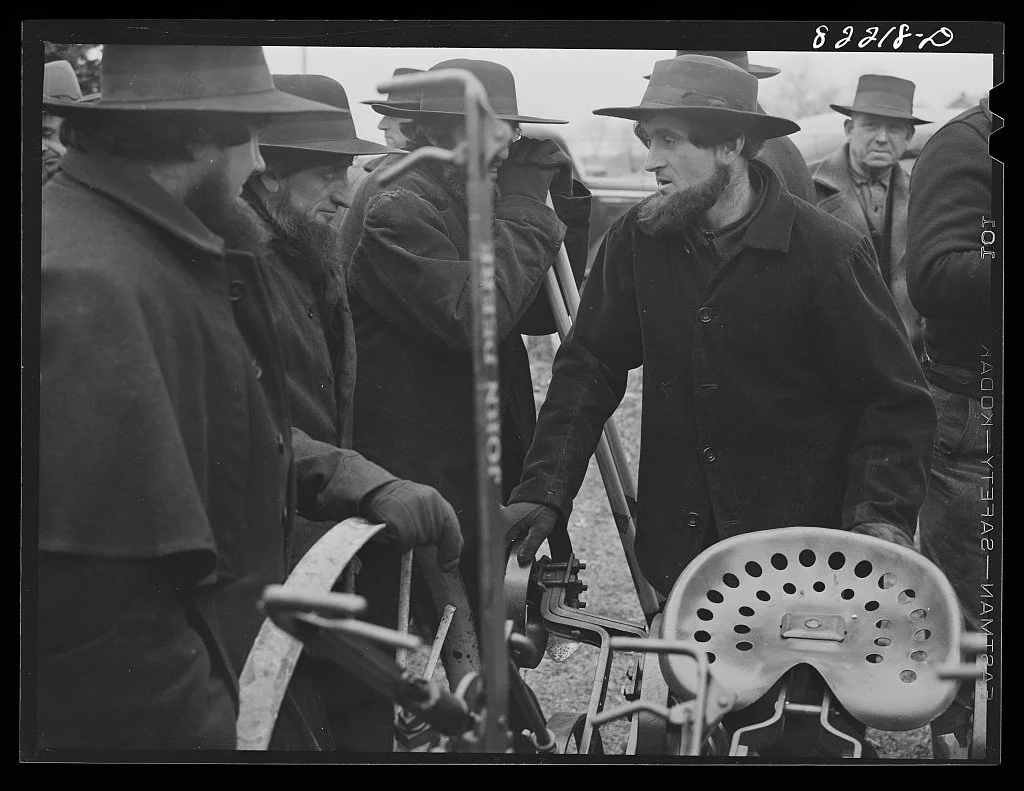
Amish men at the auction [3]
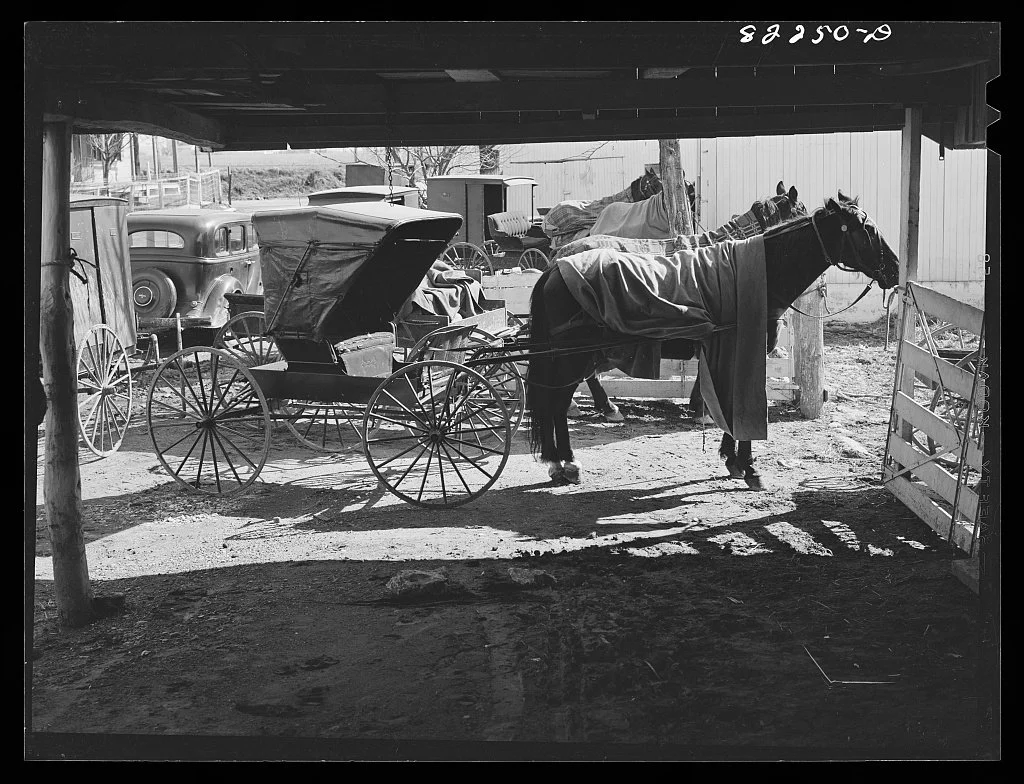
Amish and Mennonite buggies and cars at the auction [4]
His photographs share both the demise of a farm and the coming together of a community to resurrect its pieces in their own farming endeavors. They preserve a story about daily life in Lancaster County in the 1940s among the Pennsylvania Dutch.
Photograph sources:
[1] Collier, John, Jr, photographer. Lancaster County, Pennsylvania. Farm auction. Pennsylvania United States Lancaster County, 1942. Mar. Photograph. https://www.loc.gov/item/2017822074/.
[2] Collier, John, Jr, photographer. Lancaster County, Pennsylvania. Amish, Mennonite, and Pennsylvania Dutch farmers all came to this farm auction so that the auctioneer ran the bidding in "Deutsch" as well as English. Lancaster County United States Pennsylvania, 1942. Mar. Photograph. https://www.loc.gov/item/2017822051/.
[3] Collier, John, Jr, photographer. Lancaster County, Pennsylvania. Farm auction. Amish farmers cannot use tractor-drawn equipment on their lands, but can use horse-drawn cultivators providing they do not have rubber wheels. Lancaster County United States Pennsylvania, 1942. Mar. Photograph. https://www.loc.gov/item/2017822058/.
[4] Collier, John, Jr, photographer. Lancaster County, Pennsylvania. Mennonite buggy. Pennsylvania United States Lancaster County, 1942. Mar. Photograph. https://www.loc.gov/item/2017822090/.